
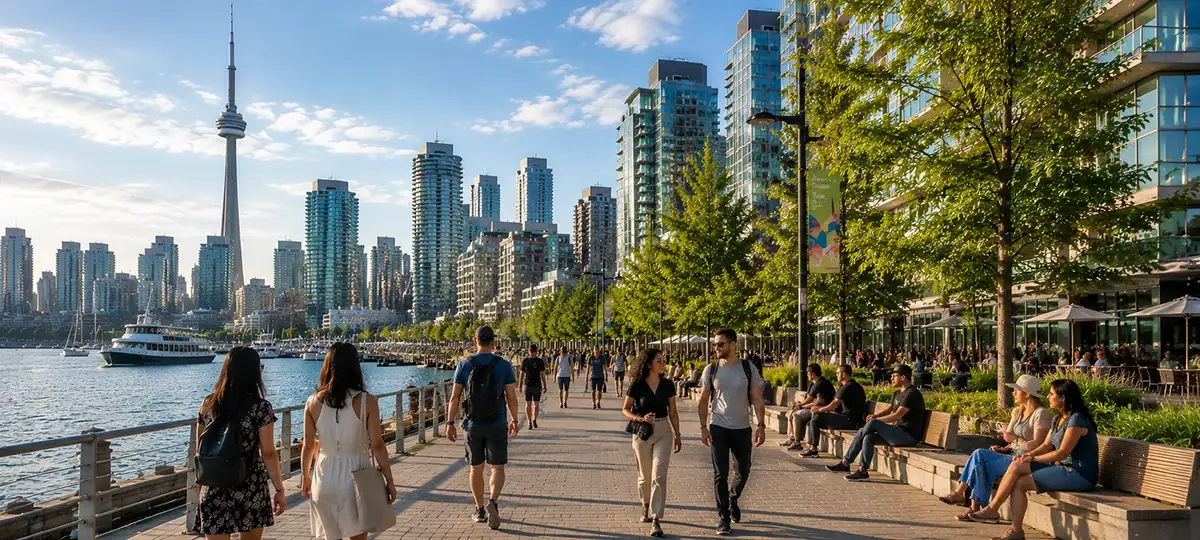
Modern Canada: A Memory Guide for the Citizenship Test
Remember the Modern Canada chapter: one anchor per topic, the names and dates learners mix up, and recall cards to test yourself.
1. Prosperity and the social programs it paid for
2. Canada in the world: the Cold War, peacekeeping and refugees
3. A changing society
4. The arts: who made what
5. Sports: the athletes, the trophies and the games
6. Discoveries and inventions: who invented what
The confusion clinic
How to remember Modern Canada
Your next step
Official sources
Try this now
Read one part and answer its recall cards before you look.
Study the key facts from Discover Canada’s Modern Canada chapter: social programs, international engagement, social change, the arts, sports and inventions.
Start with one part, then use its recall cards or review sheet to test yourself. The sports part also draws on the national sports and trophies from the Canadian Symbols chapter. Allow about 12 minutes to read, with extra time for the cards and games.
Where the guide gives a figure, this page gives the guide’s figure, because the test is based on the guide. The lesson notes what has changed since.
Discover Canada, Modern Canada
Numbers to know
Tap a number. Say what it stands for before the card turns.
0 of 8 revealed
1. Prosperity and the social programs it paid for
The chapter opens with a cause and its effects. Postwar Canada enjoyed record prosperity and material progress. The restrictive trading policies of the Depression era were opened up by treaties such as the General Agreement on Tariffs and Trade, GATT, which the guide describes as “now the World Trade Organization (WTO)”. That is the guide’s shorthand: GATT is an agreement on trade rules, and the WTO is the organization within whose framework those rules continue. The discovery of oil in Alberta in 1947 began the modern energy industry. In 1951, for the first time, a majority of Canadians could afford adequate food, shelter and clothing, and between 1945 and 1970, as Canada drew closer to the United States and other trading partners, it had one of the strongest economies among industrialized nations. Today Canadians enjoy one of the world’s highest standards of living, maintained, the guide says, by hard work and by trade, in particular with the United States.
Then the effect: as prosperity grew, so did the ability to support social assistance programs. The Canada Health Act ensures common elements and a basic standard of coverage. Unemployment insurance, now called employment insurance, was introduced by the federal government in 1940. Old Age Security was devised as early as 1927. The Canada and Quebec Pension Plans came in 1965. Publicly funded education is provided by the provinces and territories. Read this section of the lesson.
Don’t mix these up. Three years for three programs, in the order the guide does not give them: 1927 Old Age Security, 1940 unemployment insurance, 1965 the pension plans. GATT is the agreement and the WTO the organization; the guide’s “now the WTO” is the test’s answer, and the agreement lives on inside the organization. The guide names the Canada Health Act’s coverage standard, and it names the provinces and territories as the providers of publicly funded education.
Practise this: Prosperity and social programs
Try first
Answer in your head before you open each card.
0 of 6 known
What discovery in 1947 began Canada’s modern energy industry?
What is GATT, and what is it now?
Which year was the first in which a majority of Canadians could afford adequate food, shelter and clothing?
When was Old Age Security devised, when was unemployment insurance introduced, and when did the Canada and Quebec Pension Plans begin?
What does the Canada Health Act ensure?
Who provides publicly funded education?
2. Canada in the world: the Cold War, peacekeeping and refugees
The guide connects Canada’s international role with the Cold War. Like Australia and New Zealand, Canada developed its autonomy gradually, with a capacity to make significant contributions internationally. The Cold War began when several liberated countries of eastern Europe became part of a Communist bloc controlled by the Soviet Union under the dictator Josef Stalin. Canada joined the other democratic countries of the West in the North Atlantic Treaty Organization, NATO, a military alliance, and joined the United States in the North American Aerospace Defence Command, NORAD.
Canada also joined the United Nations. It took part in the UN operation defending South Korea in the Korean War of 1950–53, with 500 dead and 1,000 wounded, and in numerous UN peacekeeping missions in places as varied as Egypt, Cyprus and Haiti, as well as other international security operations, such as those in the former Yugoslavia and Afghanistan. And it opened its doors: Canada welcomed thousands of refugees from Communist oppression, including about 37,000 who escaped Soviet tyranny in Hungary in 1956, and, after the Communist victory in the Vietnam War in 1975, over 50,000 Vietnamese who sought refuge here. Read this section of the lesson.
Don’t mix these up. Three organizations with three jobs: NATO is a military alliance of Western democracies; NORAD is Canada with the United States, for aerospace defence; the UN is where Korea and the peacekeeping missions belong. The guide gives its examples under two descriptions: Egypt, Cyprus and Haiti as UN peacekeeping missions, and the former Yugoslavia and Afghanistan as other international security operations. Two refugee movements two decades apart: Hungary in 1956, about 37,000; Vietnam after 1975, over 50,000.
Practise this: Cold War, peacekeeping and refugees
Try first
Answer in your head before you open each card.
0 of 6 known
How did the Cold War begin, in the guide’s words?
What is NATO, and what is NORAD?
What numbers does the guide give for Canadians killed and wounded in the Korean War?
Name three places where Canada took part in UN peacekeeping missions.
Where did Canada take part in other international security operations?
How many refugees came from Hungary in 1956, and how many Vietnamese sought refuge after 1975?
3. A changing society
The third story is about Canada itself. As social values changed over more than 50 years, Canada became a more flexible and open society. Many took advantage of expanding secondary and postsecondary educational opportunities, and a growing number of women entered the professional work force. French-Canadian society and culture flourished in the postwar years, and Quebec’s rapid change in the 1960s, the Quiet Revolution, is told in its own section of the lesson.
The vote widened: most Canadians of Asian descent had been denied the vote in federal and provincial elections; in 1948 the last of these, the Japanese-Canadians, gained it, and “Aboriginal people were granted the vote in 1960”, in the guide’s words. What changed in 1960 was that First Nations people could vote federally without giving up their status. The guide says “every citizen over the age of 18 may vote”; today a Canadian citizen aged 18 or older may vote in federal elections. And the country’s makeup changed: the idea of multiculturalism, a result of 19th- and 20th-century immigration, gained a new impetus. By the 1960s, one-third of Canadians had origins that were neither British nor French, and took pride in preserving their distinct culture in the Canadian fabric. Today, diversity enriches Canadians’ lives, particularly in the cities. Read this section of the lesson.
Don’t mix these up. The two things that expanded were education and women’s place in the professional work force, both signs of a more flexible and open society. One-third is the share of Canadians by the 1960s whose origins were neither British nor French. The voting dates, 1948 and 1960, are told in Important Dates in Discover Canada; here the guide uses them to show a society opening up.
Practise this: Canada’s changing society
Try first
Answer in your head before you open each card.
0 of 5 known
What did many Canadians take advantage of as society became more flexible and open?
What happened in the professional work force as social values changed?
By the 1960s, what proportion of Canadians had origins that were neither British nor French?
Which idea gained a new impetus as a result of 19th- and 20th-century immigration?
How did French-Canadian society and culture change in the postwar years?
4. The arts: who made what
The guide names its artists in groups. Keep each name with its group and its one fact. Read this section of the lesson.
- Painting and sculpture. The Group of Seven, founded in 1920, developed a style of painting to capture the rugged wilderness landscapes. Emily Carr painted the forests and Aboriginal artifacts of the West Coast. Les Automatistes of Quebec were pioneers of modern abstract art in the 1950s, most notably Jean-Paul Riopelle. Louis-Philippe Hébert of Quebec was a celebrated sculptor of historical figures. Kenojuak Ashevak pioneered modern Inuit art with etchings, prints and soapstone sculptures.
- Writers and musicians. The guide’s men and women of letters: Stephen Leacock, Louis Hémon, Sir Charles G.D. Roberts, Pauline Johnson, Émile Nelligan, Robertson Davies, Margaret Laurence and Mordecai Richler. Musicians Sir Ernest MacMillan and Healey Willan won renown in Canada and abroad. Writers Joy Kogawa, Michael Ondaatje and Rohinton Mistry diversified Canada’s literary experience.
- Film and thought. The films of Denys Arcand have been popular in Quebec and across the country and have won international awards; Norman Jewison and Atom Egoyan are the other filmmakers named. Marshall McLuhan and Harold Innis were pioneer thinkers. Canada has a network of regional theatres and world-renowned performing arts companies.
- Museums and historic sites. National historic sites are in every province and territory and include battlefields, archaeological sites, buildings and sacred spaces.
Don’t mix these up. Two painters of the land: the Group of Seven painted the rugged wilderness, Emily Carr the West Coast’s forests and Aboriginal artifacts. Two Quebec pioneers in different arts: Riopelle and Les Automatistes in abstract painting, Hébert in sculpture. Three writers “diversified” the literature, Kogawa, Ondaatje and Mistry, and they are not on the men-and-women-of-letters list. Arcand is the filmmaker whose films won international awards; McLuhan and Innis are thinkers, not artists.
Practise this: Arts and culture
Who made what
Hide one column, answer each row out loud or on paper, then reveal it.
- Group of SevenPainted the rugged wilderness landscapes; founded 1920Painting
- Emily CarrPainted the forests and Aboriginal artifacts of the West CoastPainting
- RiopelleMost notable of Les Automatistes, Quebec’s pioneers of modern abstract art in the 1950sPainting
- HébertCelebrated Quebec sculptor of historical figuresSculpture
- AshevakPioneered modern Inuit art: etchings, prints, soapstone sculpturesInuit art
- MacMillan, WillanMusicians who won renown in Canada and abroadMusic
- Kogawa, Ondaatje, MistryWriters who diversified Canada’s literary experienceLiterature
- ArcandFilmmaker whose films were popular in Quebec and across the country and won international awardsFilm
- McLuhan, InnisPioneer thinkersThought
5. Sports: the athletes, the trophies and the games
The sports skill draws on two chapters. From Modern Canada come the athletes; from Canadian Symbols come the national sports and their trophies. Read the sports part of the lesson, and the Popular Sports section of the Symbols lesson.
1972
Paul Henderson
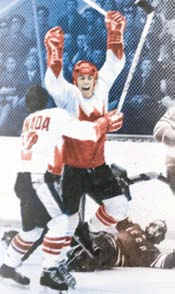
Scored the winning goal for Canada in the Canada-Soviet Summit Series, “the goal heard around the world”.
Remember it: 1972, one goal, one series.
1979–1988
Wayne Gretzky
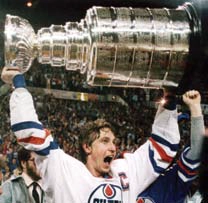
One of the greatest hockey players of all time, he played for the Edmonton Oilers from 1979 to 1988.
Remember it: Gretzky: Edmonton, the Oilers.
1980
Terry Fox
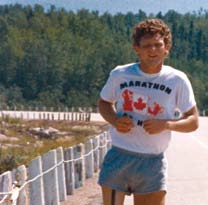
A British Columbian who lost his right leg to cancer at 18, he began the Marathon of Hope, a cross-country run for cancer research, and became a hero to Canadians. He did not finish, and yearly fundraising events continue in his name.
Remember it: Fox: 1980, cancer, the Marathon of Hope.
1985
Rick Hansen
A fellow British Columbian, he circled the globe in a wheelchair to raise funds for spinal cord research.
Remember it: Hansen: 1985, the globe, spinal cord research.
1996
Donovan Bailey
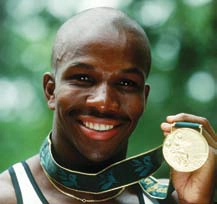
At the Olympic Summer Games he became a world record sprinter and double Olympic gold medallist.
Remember it: Bailey: 1996, sprint, two golds.
Paralympics
Chantal Petitclerc
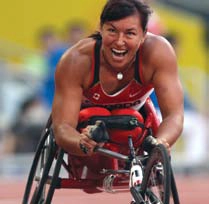
A world champion wheelchair racer and Paralympic gold medallist.
Remember it: Petitclerc: wheelchair racing.
The guide also names Mark Tewksbury, an Olympic gold medallist and prominent activist for gay and lesbian Canadians, and Catriona Le May Doan, who carried the flag after winning speed-skating gold at the 2002 Olympic Winter Games. Sports have flourished in every province and territory, with amateur and professional star athletes and Olympic medal winners, and in the national sport of ice hockey Canadian teams have dominated the world.
From the Symbols chapter: hockey is Canada’s most popular spectator sport and the national winter sport, developed in Canada in the 1800s. The National Hockey League plays for the Stanley Cup, donated by Lord Stanley, the Governor General, in 1892. The Clarkson Cup, established in 2005 by Adrienne Clarkson, the 26th Governor General and the first of Asian origin, is awarded for women’s hockey. Canadian football is the second most popular sport, and its professional teams in the Canadian Football League compete for the Grey Cup, donated by Lord Grey, the Governor General, in 1909. Curling, an ice game introduced by Scottish pioneers, is popular. Lacrosse, an ancient sport first played by Aboriginals, is the official summer sport. Soccer has the most registered players of any game in Canada. Basketball was invented by Canadian James Naismith in 1891.
Don’t mix these up. Three cups, three Governors General, three dates: the Stanley Cup for hockey, 1892; the Grey Cup for football, 1909; the Clarkson Cup for women’s hockey, 2005. Four sports, four labels: hockey is the most popular spectator sport and the national winter sport; football is the second most popular; lacrosse is the official summer sport; soccer has the most registered players. Two British Columbians, two causes: Terry Fox ran for cancer research in 1980, Rick Hansen wheeled around the globe for spinal cord research in 1985.
Practise this: Sports, in the Modern Canada chapter · Sports, in the Symbols chapter
Try first
Answer in your head before you open each card.
0 of 6 known
Who scored “the goal heard around the world”, and when?
What did Donovan Bailey achieve at the 1996 Olympic Summer Games?
What did Terry Fox do in 1980, and at what age had he lost his right leg?
Who donated the Stanley Cup, and when? The Grey Cup? The Clarkson Cup?
Which sport is the official summer sport, and which game has the most registered players?
Which ice game did Scottish pioneers introduce?
6. Discoveries and inventions: who invented what
Read this section of the lesson.
The list, in the guide’s order: Alexander Graham Bell hit on the idea of the telephone at his summer house in Canada. Joseph-Armand Bombardier invented the snowmobile. Sir Sandford Fleming invented the world system of standard time zones. Mathew Evans and Henry Woodward, the guide says, together invented the first electric light bulb and later sold the patent to Thomas Edison, who commercialized it. Reginald Fessenden contributed to the invention of radio, sending the first wireless voice message in the world. Dr. Wilder Penfield was a pioneering brain surgeon at McGill University in Montreal, known as “the greatest living Canadian”. Dr. John A. Hopps invented the first cardiac pacemaker. SPAR Aerospace and the National Research Council invented the Canadarm, a robotic arm used in outer space. Mike Lazaridis and Jim Balsillie of Research in Motion, RIM, are known for the BlackBerry.
Around the list: Sir Frederick Banting of Toronto and Charles Best discovered insulin, a hormone to treat diabetes, which the guide credits with saving 16 million lives worldwide. Since 1989 the Canadian Space Agency and Canadian astronauts have taken part in space exploration, often using the Canadarm. Gerhard Herzberg, a refugee from Nazi Germany, John Polanyi, Sidney Altman, Richard E. Taylor, Michael Smith and Bertram Brockhouse were Nobel Prize-winning scientists. Canadian advances in science and technology, the guide says, have changed the way the world communicates and does business.
Don’t mix these up. Three medical names: Banting and Best discovered insulin; Hopps invented the pacemaker; Penfield was the brain surgeon. Two communications pioneers: Bell the telephone, Fessenden the first wireless voice message. Evans and Woodward are the guide’s light-bulb inventors; Edison commercialized it. Fleming’s invention is standard time zones, not a machine. Naismith’s basketball, 1891, sits in the sports passage but is an invention too.
Practise this: Canadian discoveries and inventions
Who invented what
Hide one column, answer each row out loud or on paper, then reveal it.
- BellThe telephone, the idea hit on at his summer house in CanadaCommunication
- BombardierThe snowmobile, a light-weight winter vehicleTransport
- FlemingThe world system of standard time zonesTime
- Evans and WoodwardThe first electric light bulb, as the guide puts it; the patent later sold to EdisonLight
- FessendenRadio: the first wireless voice message in the worldCommunication
- PenfieldPioneering brain surgeon at McGill, “the greatest living Canadian”Medicine
- HoppsThe first cardiac pacemakerMedicine
- SPAR Aerospace and the NRCThe Canadarm, a robotic arm used in spaceSpace
- Lazaridis and BalsillieResearch in Motion and the BlackBerryCommunication
- Banting and BestInsulin; the guide credits it with saving 16 million livesMedicine
- NaismithBasketball, in 1891Sport
The confusion clinic
These cards hold the facts that most often land on the wrong year, trophy or organization. Sort each one, then read the reason.
Which year?
Four years from the first part of the chapter. Put each program or event with its year.
0 of 4 answered
Unemployment insurance is introduced
The Canada and Quebec Pension Plans begin
Oil is discovered in Alberta
Old Age Security is devised
NATO, NORAD or the UN?
Each fact belongs to one organization. The reason quotes the guide.
0 of 5 answered
A military alliance of the democratic countries of the West
The operation defending South Korea, 1950–53
Aerospace defence with the United States
Joined with other democratic countries of the West
Peacekeeping in Egypt, Cyprus and Haiti
Which trophy?
Three cups, three Governors General, three dates.
0 of 6 answered
Established in 2005 by Adrienne Clarkson, the 26th Governor General
Donated by Lord Grey in 1909
The championship of Canadian football
Awarded for women’s hockey
Donated by Lord Stanley in 1892
Played for by the National Hockey League
How to remember Modern Canada
- Recall before you look. The cards on this page ask first and show the answer second, because trying to remember strengthens memory more than reading again.Karpicke & Roediger, 2008
- Practise both directions. Ask “Who invented the pacemaker?” and also “What is Hopps known for?”. Varied practice helps with questions you have not seen before.Butler et al., 2017
- Space your reviews. Spread-out reviews last longer than one long session. The plan below is one practical routine, not the only interval that works.Cepeda et al., 2008
A simple plan
One practical routine: three short sessions, spread out.
Today
Read and recall
Read the six parts and answer the recall cards under each one. Then try the confusion clinic.
In a few days
Names from memory
On the two sheets, hide the names and say who made or invented what; then hide the works and go the other way. Do the sorting cards again, out of order.
About a week later
Practise the chapter
Take a Smart Quiz on Modern Canada: practice questions based on Discover Canada, which show which skills still slip. Then practise that skill from its section above.
Your next step
Read the Modern Canada lesson for the guide’s full text, with checks after each section. Then take a Smart Quiz on Modern Canada, or the Modern Canada quiz to go through the chapter in order.
Quebec’s Quiet Revolution, the referendums and the Constitution are dated events, told in Important Dates in Discover Canada. The Official Languages Act, the 2006 recognition of the Québécois as a nation within a united Canada, and the peoples behind today’s diversity are explained in the Who We Are memory guide. The national sports and their trophies are in the Popular Sports section of the Canadian Symbols lesson.
Official sources
Use Discover Canada as your primary guide. Its figures, such as the refugee numbers and the casualty counts, are the ones the test is based on; the lesson notes where today’s facts differ.
- Discover Canada, Modern Canada · English
- Découvrir le Canada, Le Canada moderne · Français
- Discover Canada, Canadian Symbols · English, for the sports passage
About these explanations and translations
CitizenPro uses AI assistance to develop explanations and translations. They are supplementary learning aids, not official IRCC translations. They have not been independently reviewed by native speakers.
Next step
Sort the trophies, the organizations and the programs, then practise the skill that slipped in a Smart Quiz.
Next up:
Canadian Symbols: A Memory Guide for the Citizenship TestRemember Canada’s symbols for the citizenship test: the motto and the beaver, the Parliament Buildings’ three dates, the anthems, the Order of Canada and the six Victoria Cross recipients, with recall cards and sorting games. Free.
On this page
1. Prosperity and the social programs it paid for
2. Canada in the world: the Cold War, peacekeeping and refugees
3. A changing society
4. The arts: who made what
5. Sports: the athletes, the trophies and the games
6. Discoveries and inventions: who invented what
The confusion clinic
How to remember Modern Canada
Your next step
Official sources
Related reading
Remember Canada’s symbols for the citizenship test: the motto and the beaver, the Parliament Buildings’ three dates, the anthems, the Order of Canada and the six Victoria Cross recipients, with recall cards and sorting games. Free.
Remember Canada’s regions for the citizenship test: one anchor per province and territory, every capital, the mix-ups the questions test, and recall cards. Free.
The key dates in Discover Canada, from Cabot in 1497 to the Charter in 1982, told as one story in six eras, with a memory hook for each date, recall cards, the national holidays and a review sheet for the citizenship test.