

Canadian Symbols: A Memory Guide for the Citizenship Test
The coat of arms and the beaver, the Parliament Buildings, the two anthems and the Victoria Cross: one anchor for each, the dates and names the questions mix up, and recall cards to check yourself.
What a symbol is, in the guide’s words
1. The coat of arms, the motto and the beaver
2. The Parliament Buildings: a timeline and one survivor
3. Two anthems: O Canada and God Save the King
4. Honours: the Order of Canada and the Victoria Cross
The confusion clinic
Every fact on one line each
How to remember Canada’s symbols
Your next step
Official sources
Try this now
Read one symbol and answer its recall cards before you look.
The Symbols chapter is where the citizenship test asks small, exact things: a year, a Latin motto, a line of a song, the name of one man among six. Learners who know the chapter still lose marks here in two ways. They attach a date to the wrong building or song, and they credit one Victoria Cross recipient with another’s deed.
This guide gives each symbol one anchor, names the pairs that get swapped, and ends with cards and sorting games so you recall before you read again. It follows the guide’s order, the same as the Canadian Symbols lesson, which has the full text. Reading takes about 10 minutes; the cards and games take longer and are meant for a second visit.
Where the guide gives a figure or a name, this page gives the guide’s version, because the test is based on the guide. The lesson notes what has changed since.
Discover Canada, Canadian Symbols
What a symbol is, in the guide’s words
The guide opens the chapter with a definition the test can ask for: Canada has many important symbols, meaning objects, events and people that have special meaning. Together they help explain what it means to be Canadian and express our national identity. Keep that pairing, objects, events and people and national identity, because a question can ask for either half. Read the opening section of the lesson.
Numbers to know
Tap a number. Say what it stands for before the card turns.
0 of 7 revealed
1. The coat of arms, the motto and the beaver
- The coat of arms and motto. Anchor: A Mari Usque Ad Mare, Latin for “from sea to sea”. Also in the guide: Canada adopted an official coat of arms and a national motto after the First World War, as an expression of national pride; the arms contain symbols of England, France, Scotland and Ireland as well as red maple leaves; today the arms can be seen on dollar bills, government documents and public buildings. Read this section of the lesson.
- The beaver. Anchor: the five-cent coin. Also in the guide: adopted centuries ago as a symbol of the Hudson’s Bay Company; the emblem of the St. Jean Baptiste Society, a French-Canadian patriotic association, in 1834, and adopted by other groups too; the guide calls it an industrious rodent; it appears on the coats of arms of Saskatchewan and Alberta, and of the cities of Montreal and Toronto. Read this section of the lesson.
Don’t mix these up. The beaver and the maple leaf are both emblems, but the guide gives them different histories: the maple leaf is Canada’s best-known symbol, adopted by French-Canadians in the 1700s and on uniforms since the 1850s, while the beaver belongs to the Hudson’s Bay Company and the St. Jean Baptiste Society. The coat of arms carries red maple leaves, not a beaver. And the motto is “from sea to sea”, three seas being Canada’s geography but two seas being the motto.
Practise this: Coat of arms, motto and beaver
Try first
Answer in your head before you open each card.
0 of 6 known
What does the national motto, A Mari Usque Ad Mare, mean?
Which four countries’ symbols are in the coat of arms, alongside red maple leaves?
When, and why, did Canada adopt an official coat of arms and motto?
Which Canadian coin shows the beaver?
Which company adopted the beaver as a symbol centuries ago, and which society made it an emblem in 1834?
Which two provinces and which two cities have the beaver on their coats of arms, according to the guide?
2. The Parliament Buildings: a timeline and one survivor
The Parliament Buildings stand in Ottawa, Canada’s capital. Anchor: a timeline in four steps. The buildings were completed in the 1860s; the Centre Block was destroyed by an accidental fire in 1916 and rebuilt in 1922; the Peace Tower was completed in 1927, in memory of the First World War. Also in the guide: the towers, arches, sculptures and stained glass embody the French, English and Aboriginal traditions and the Gothic Revival architecture popular in Queen Victoria’s time; the Library is the only part of the original building remaining; according to Discover Canada, the Memorial Chamber within the Peace Tower contains the Books of Remembrance, with the names of soldiers, sailors and airmen who died serving Canada in wars or while on duty. Since February 2019 the Books have been displayed in the West Block while the Centre Block is rehabilitated; for the test, the guide’s answer is the Memorial Chamber. The provincial legislatures are architectural treasures: the Quebec National Assembly is in the French Second Empire style, and the other legislatures are Baroque, Romanesque and neoclassical, reflecting the Greco-Roman heritage in which democracy originated. Read this section of the lesson.
Don’t mix these up. The fire and the tower are eleven years apart and belong to different sentences: the Centre Block burned in 1916 and was rebuilt in 1922; the Peace Tower was completed in 1927 and remembers the First World War. The Library survived the fire; the Peace Tower did not exist yet. The guide places the Books of Remembrance in the Peace Tower’s Memorial Chamber; Remembrance Day, November 11, is a date in the calendar, a different fact.
Practise this: Parliament Buildings
Try first
Answer in your head before you open each card.
0 of 6 known
When were the Parliament Buildings completed, when did the Centre Block burn, and when was it rebuilt?
Which part of the original building survived the 1916 fire?
When was the Peace Tower completed, and in memory of what?
According to Discover Canada, where are the Books of Remembrance kept, and what do they record?
Which architectural style, popular in Queen Victoria’s time, do the Parliament Buildings show?
Which heritage do the styles of the provincial legislatures reflect, in the guide’s words?
3. Two anthems: O Canada and God Save the King
Anchor: 1880 and 1980. O Canada was first sung in Québec City in 1880 and proclaimed the National Anthem in 1980, exactly a century later. Also in the guide: French and English Canadians sing different words to the National Anthem; the Royal Anthem of Canada is “God Save the King (or Queen)”, played or sung on any occasion when Canadians wish to honour the Sovereign; in French it is “Dieu protège le Roi”. The lines the questions quote, as the guide prints them: “True patriot love in all thy sons command”, “The true North strong and free!”, and the ending repeated twice, “O Canada, we stand on guard for thee”. One line has changed since the guide was printed: in 2018 Parliament made it “True patriot love in all of us command”. Sing “all of us” today; for the test, know that the guide says “all thy sons”. From the Royal Anthem: “God save our gracious King”, “Send him victorious, happy and glorious”, “Long to reign over us”. Read this section of the lesson.
Don’t mix these up. Two anthems, two purposes: O Canada is the National Anthem; God Save the King is the Royal Anthem, for honouring the Sovereign. Two years a century apart: first sung 1880, proclaimed 1980. Two endings: “we stand on guard for thee” belongs to O Canada, “long to reign over us” to the Royal Anthem.
Practise this: National and Royal Anthems
Try first
Answer in your head before you open each card.
0 of 6 known
When and where was O Canada first sung, and when was it proclaimed the National Anthem?
Do French and English Canadians sing the same words to O Canada?
What is the Royal Anthem of Canada, and when is it used?
What is the French title of the Royal Anthem?
Complete the line as the guide prints it: “True patriot love in all thy sons ______.”
Which phrase ends the English words of O Canada, sung twice?
4. Honours: the Order of Canada and the Victoria Cross
Anchor: 1967 and 1854. Canada started its own honours system with the Order of Canada in 1967, the centennial of Confederation, after using British honours for many years. The Victoria Cross has been awarded to 96 Canadians since 1854. Also in the guide: official awards are called honours, consisting of orders, decorations and medals; anyone may nominate a fellow citizen; the Victoria Cross is the highest honour available to Canadians, awarded for the most conspicuous bravery, a daring or pre-eminent act of valour or self-sacrifice, or extreme devotion to duty in the presence of the enemy. Read this section of the lesson.
The guide names six recipients. Each card below holds one, with the fact the questions attach to him.
1854
Alexander Roberts Dunn, the first Canadian
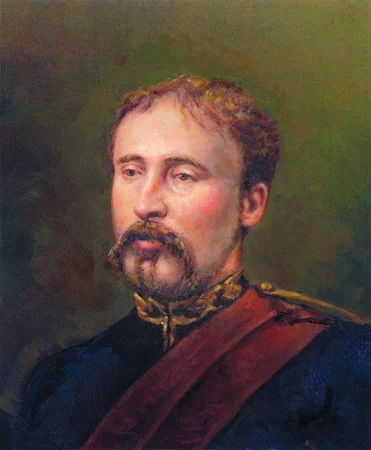
Born in present-day Toronto, he served in the British Army in the Charge of the Light Brigade at Balaclava in 1854, in the Crimean War, and was the first Canadian to be awarded the Victoria Cross.
Why it matters: 1854 is the year of the charge, and the year the guide’s count of 96 begins; the award itself came afterward.
Remember it: First: Dunn, 1854, the Light Brigade.
1857
William Hall, the first Black recipient
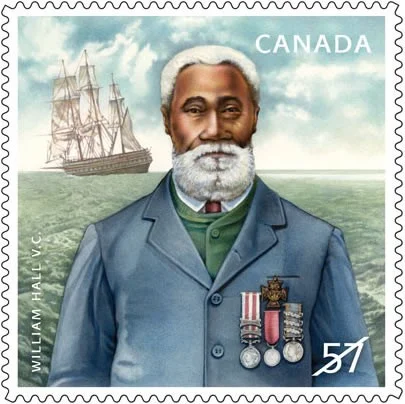
An Able Seaman from Horton, Nova Scotia, whose parents were American slaves, he was the first Black man to be awarded the V.C., for his role in the Siege of Lucknow during the Indian Rebellion.
Why it matters: A Nova Scotian sailor, not a soldier, and the only one of the six from the Indian Rebellion.
Remember it: Hall: Horton, the sea, Lucknow.
1917
Filip Konowal, born in Ukraine
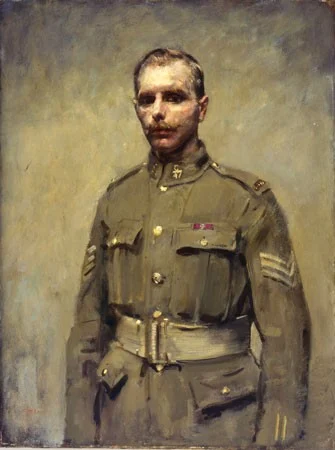
A Corporal who showed exceptional courage in the Battle of Hill 70, he became the first member of the Canadian Corps not born in the British Empire to be awarded the V.C.
Why it matters: The First World War’s “first”: born outside the Empire.
Remember it: Konowal: Ukraine, Hill 70, 1917.
First World War
Billy Bishop, the flying ace
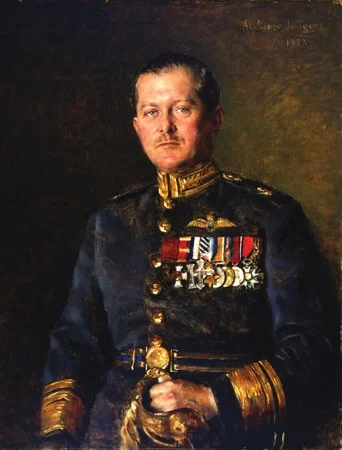
Captain Billy Bishop, born in Owen Sound, Ontario, earned the V.C. in the Royal Flying Corps during the First World War, and was later an honorary Air Marshal of the Royal Canadian Air Force.
Why it matters: The pilot of the First World War; Gray is the pilot of the Second.
Remember it: Bishop: the air, Owen Sound, Air Marshal.
1943
Paul Triquet, Casa Berardi
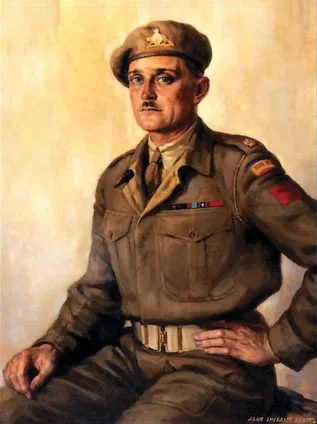
Captain Paul Triquet of Cabano, Quebec, earned the V.C. leading his men and a handful of tanks in the attack on Casa Berardi in Italy, during the Second World War, and was later a Brigadier.
Why it matters: Italy, 1943: the Second World War on land.
Remember it: Triquet: Cabano, tanks, Casa Berardi.
August 1945
Robert Hampton Gray, the last to date
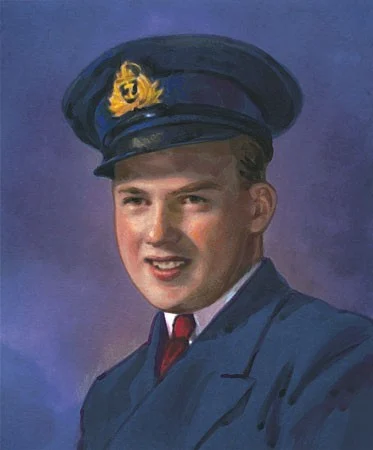
A navy pilot born in Trail, B.C., he was killed while bombing and sinking a Japanese warship a few days before the end of the Second World War, and was the last Canadian to receive the V.C. to date.
Why it matters: The last of the 96, in the last days of the war.
Remember it: Gray: Trail, a Japanese warship, the last.
Don’t mix these up. Three “firsts” and one “last”: Dunn was the first Canadian, Hall the first Black recipient, Konowal the first member of the Canadian Corps not born in the British Empire, Gray the last to date. Two wars with two men each: Konowal and Bishop in the First World War, Triquet and Gray in the Second; Dunn’s war was the Crimean War and Hall’s the Indian Rebellion. Two pilots: Bishop flew in the First World War and lived to be an honorary Air Marshal; Gray flew for the navy in the Second and was killed. And the Order of Canada is not the Victoria Cross: one is Canada’s own honours system from 1967, the other the highest honour for bravery, counted since 1854.
Practise this: Canadian honours and the Victoria Cross
Try first
Answer in your head before you open each card.
0 of 7 known
When did Canada start its own honours system, and with which honour?
What is the highest honour available to Canadians, and what is it awarded for?
How many Canadians have received the Victoria Cross, according to the guide, and since when?
Who was the first Canadian to receive the Victoria Cross, and in which battle?
Who was the first Black man awarded the Victoria Cross, and where was he from?
Which recipient was born in Ukraine, and what was he the first to do?
Who was the last Canadian to receive the Victoria Cross to date, and how did he earn it?
The confusion clinic
These cards hold the facts that most often land on the wrong date, symbol or person. Sort each one, then read the reason.
Which year?
Four years the chapter leans on. Put each fact with its year.
0 of 5 answered
The Centre Block of Parliament is destroyed by fire
O Canada is proclaimed the National Anthem
The Peace Tower is completed
Only the Library survives
O Canada is first sung, in Québec City
Which symbol?
Each fact belongs to one symbol. The reason quotes the guide.
0 of 10 answered
A Mari Usque Ad Mare, “from sea to sea”
Seen on dollar bills, government documents and public buildings
On the coats of arms of Saskatchewan, Alberta, Montreal and Toronto
Symbols of England, France, Scotland and Ireland, with red maple leaves
Completed in 1927 in memory of the First World War
A symbol of the Hudson’s Bay Company centuries ago
Carved into the headstones of fallen soldiers
On the five-cent coin
Adopted as a symbol by French-Canadians in the 1700s
Holds the Books of Remembrance
Which Victoria Cross recipient?
Match each clue to one of these four recipients.
0 of 10 answered
The last Canadian to receive the Victoria Cross to date
An Able Seaman from Horton, Nova Scotia
Born in present-day Toronto
The first Canadian to be awarded the Victoria Cross
The Siege of Lucknow, during the Indian Rebellion
A navy pilot who sank a Japanese warship
The Charge of the Light Brigade
Born in Ukraine
The Battle of Hill 70, 1917
The first Black man to be awarded the Victoria Cross
Every fact on one line each
Hide the names and say who did what; then hide the facts and go the other way. The two men the sort left out, Bishop and Triquet, are here too.
The six Victoria Cross recipients
Hide one column, answer each row out loud or on paper, then reveal it.
- DunnFirst Canadian V.C.; Charge of the Light Brigade, Balaclava, 1854Crimean War
- HallFirst Black recipient; Able Seaman from Horton, N.S.; Siege of Lucknow, 1857Indian Rebellion
- KonowalBorn in Ukraine; Battle of Hill 70, 1917; first in the Canadian Corps not born in the EmpireFirst World War
- BishopFlying ace of the Royal Flying Corps; born in Owen Sound; later honorary Air MarshalFirst World War
- TriquetLed men and tanks at Casa Berardi, Italy, 1943; from Cabano, Quebec; later a BrigadierSecond World War
- GrayNavy pilot from Trail, B.C.; sank a Japanese warship, August 1945; the last to dateSecond World War
How to remember Canada’s symbols
- Recall before you look. The cards on this page ask first and show the answer second, because trying to remember strengthens memory more than reading again.Karpicke & Roediger, 2008
- Practise both directions. Ask “Who was the first Canadian to receive the Victoria Cross?” and also “What is Dunn known for?”. Varied practice helps with questions you have not seen before.Butler et al., 2017
- Space your reviews. Spread-out reviews last longer than one long session. The plan below is one practical routine, not the only interval that works.Cepeda et al., 2008
A simple plan
One practical routine: three short sessions, spread out.
Today
Read and recall
Read the four symbols and answer the recall cards under each one. Then try the confusion clinic.
In a few days
Names from memory
On the recipients sheet, hide the names and say who did what; then hide the facts and go the other way. Do the sorting cards again, out of order.
About a week later
Practise the chapter
Take a Smart Quiz on Canadian Symbols: practice questions based on Discover Canada, which show which skills still slip. Then practise that skill from its section above.
Your next step
Read the Canadian Symbols lesson for the guide’s full text, with checks after each section. Then take a Smart Quiz on Canadian Symbols, or the Canadian Symbols quiz to go through the chapter in order.
The flag of 1965 and the national holidays are dates, and they live in Important Dates in Discover Canada. For the provinces whose coats of arms carry the beaver, see Canada’s Regions.
Official sources
Use Discover Canada as your primary guide. Its wording, such as the six recipients it names and the count of 96, is what the test is based on; the lesson notes where today’s facts differ.
About these explanations and translations
CitizenPro uses AI assistance to develop explanations and translations. They are supplementary learning aids, not official IRCC translations. They have not been independently reviewed by native speakers.
Next step
Sort the dates and the Victoria Cross recipients, then practise the skill that slipped in a Smart Quiz.
Next up:
Canada’s Regions: A Memory Guide for the Citizenship TestRemember Canada’s regions for the citizenship test: one anchor per province and territory, every capital, the mix-ups the questions test, and recall cards. Free.
On this page
What a symbol is, in the guide’s words
1. The coat of arms, the motto and the beaver
2. The Parliament Buildings: a timeline and one survivor
3. Two anthems: O Canada and God Save the King
4. Honours: the Order of Canada and the Victoria Cross
The confusion clinic
Every fact on one line each
How to remember Canada’s symbols
Your next step
Official sources
Related reading
Remember Canada’s regions for the citizenship test: one anchor per province and territory, every capital, the mix-ups the questions test, and recall cards. Free.
The key dates in Discover Canada, from Cabot in 1497 to the Charter in 1982, told as one story in six eras, with a memory hook for each date, recall cards, the national holidays and a review sheet for the citizenship test.
Learn 30 Canadian citizenship terms with explanations in 27 languages, English and French examples, printable cards and a free group-study activity.