Every key date in Canada's history as one story in six eras, with a memory hook for each, recall cards you check yourself, and a review sheet that tests you both ways.
The whole story on one page
1. First contact and New France (1497–1670)
2. Conquest and accommodation (1759–1791)
3. War, rebellion and self-government (1812–1849)
4. Confederation, from sea to sea (1867–1885)
5. The World Wars and the vote (1914–1945)
6. Modern Canada (1960–1982)
Dates on the calendar
Quick check: which came first?
Your review sheet
How to make the dates stick
Your next step
Try this now
Cover the page and write down five dates from memory. Then come back and check.
Key takeaways
Updated: Oct 10, 2026Learn the dates as one story in six eras: each event explains the next.
Anchor on July 1, 1867 and count the years to the other dates.
Recall each date before you check, in both directions.
Know the holidays in the guide, especially January 11, April 9, July 1, November 11 and November 20.
Use the review sheet at the end of this page: hide one column, recall, reveal. Do it again after three days and after a week.
A list of years has nothing to hold on to. A story does. This page tells Canada's history from Discover Canada as one story in six eras, so each date explains the next. The Canada's History lesson tells the full story; this page is the dates, in order, with a way to keep them. Every date gets three lines: what happened, why it mattered, and a hook to remember it by. Each era ends with recall cards, and the page ends with a review sheet.
If you only learn five dates today, make them these five. Every other date on this page is a few years before or after one of them.
Five anchor dates
One per era, roughly. Learn these first, then place the rest around them. Tap a date to jump to its era.
Six eras cover about 500 years. Read the map once, then take the eras one at a time.
First contact and New France
Explorers map the coast, Canada gets its name, France builds a fur-trade colony.
Conquest and accommodation
Britain wins Quebec, protects the French way of life and takes in the Loyalists.
War, rebellion and self-government
An American invasion fails, rebellions fail, and reform wins responsible government.
Confederation, from sea to sea
A new country is born and reaches the Pacific by rail.
The World Wars and the vote
Vimy Ridge, Juno Beach, and the vote for women.
Modern Canada
Everyone votes, a new flag, two official languages and the Charter.
Aboriginal peoples lived across the land long before any European ship arrived. Over the next 170 years, explorers mapped the coast, Canada got its name, and France built a colony on the fur trade and on alliances with First Nations.Discover Canada, Canada's History
1497
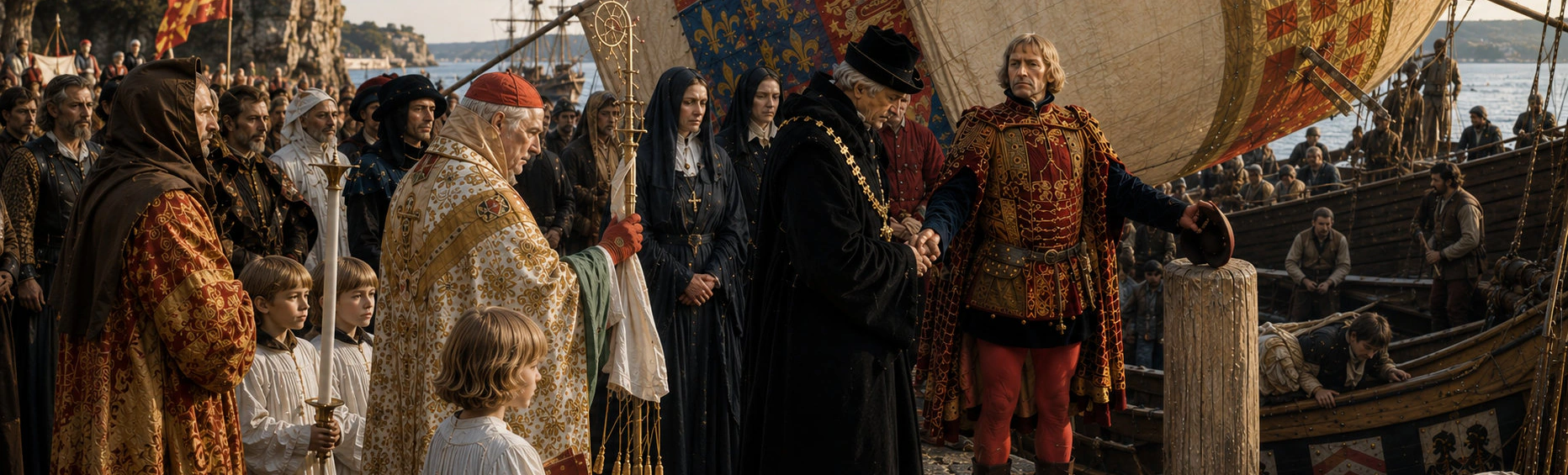
Cabot, an Italian immigrant to England, was the first to map Canada's Atlantic shore. He claimed the "New Founde Land" for England.
Why it matters: European exploration of Canada began in earnest.
Remember it: Five years after Columbus, 1492.
1534–1542
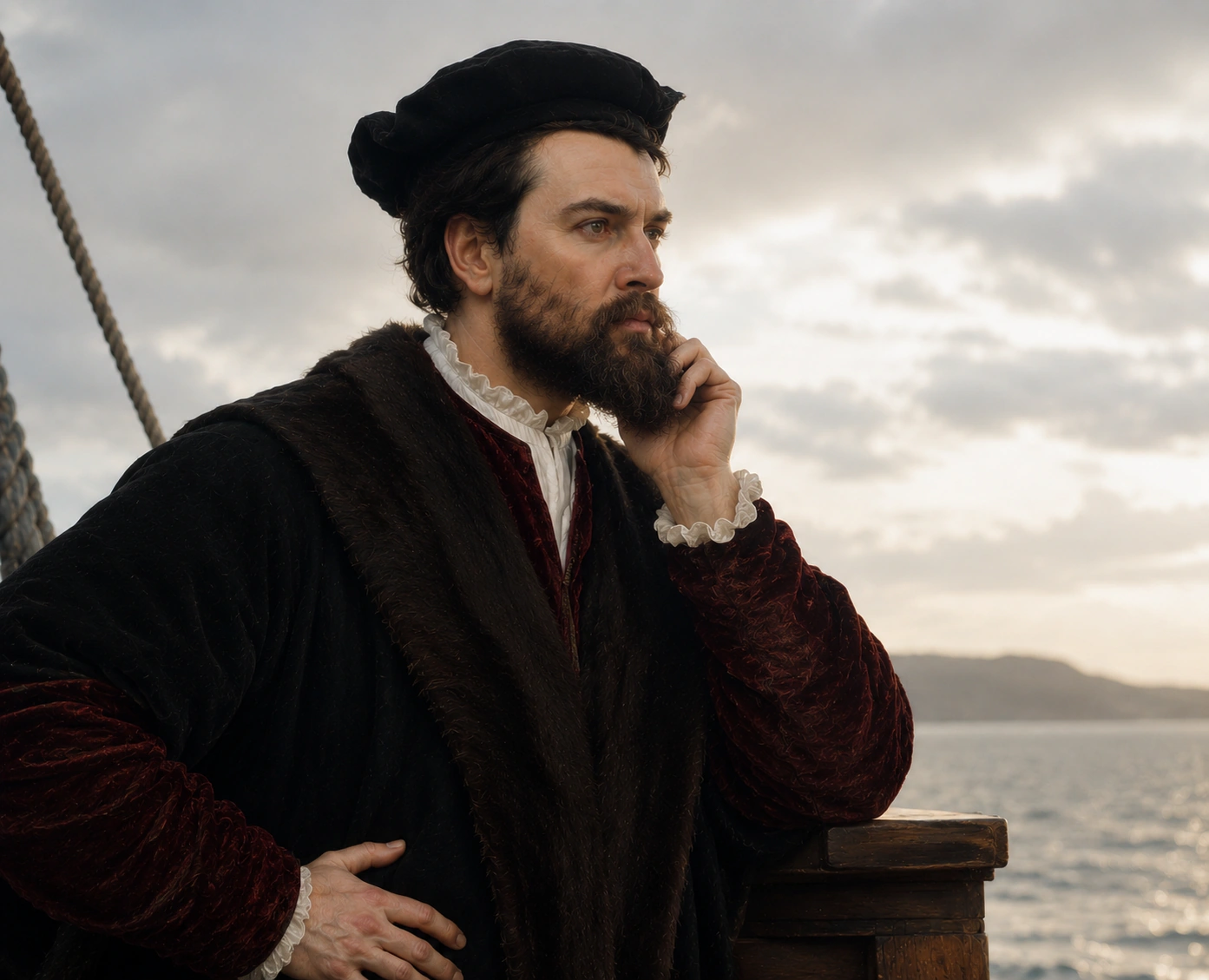
Cartier made three voyages up the St. Lawrence and claimed the land for the King of France. His guides used the Iroquoian word kanata, meaning "village."
Why it matters: By the 1550s, "Canada" was on the maps.
Remember it: A word for village became the name of a country.
1608
The French first settled in Acadia in 1604. Four years later, Samuel de Champlain built a fortress at what is now Québec City.
Why it matters: Québec became the heart of New France.
Remember it: Acadia in 1604, Québec in 1608.
1670
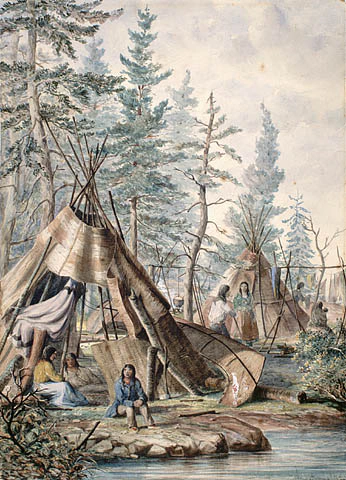
King Charles II of England gave the Company exclusive trading rights over the lands draining into Hudson Bay.
Why it matters: Its flag flew over Western Canada for 200 years before Confederation.
Remember it: 1670 plus 200 years: in 1869 Canada took over the Company's northwest.
Try first
Answer in your head before you open each card.
0 of 4 known
Who first mapped Canada's Atlantic shore, and when?
What did the word kanata mean?
1608: what happened?
Which king granted the Hudson's Bay Company its trading rights, and when?
Britain won the long war with France for North America, then had to govern a French-speaking, Catholic colony. Its answer was accommodation. Soon after, the American Revolution sent tens of thousands of Loyalists north.Discover Canada, Canada's History
1759
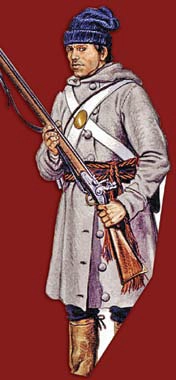
The British defeated the French at Québec City. Both commanders, Wolfe and Montcalm, were killed.
Why it matters: It marked the end of France's empire in America.
Remember it: Both generals fall, and so does New France.
1774
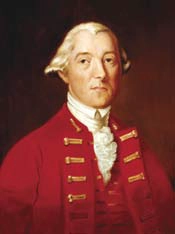
Britain gave Catholics religious freedom and the right to hold public office, and restored French civil law while keeping British criminal law.
Why it matters: One of the constitutional foundations of Canada, and the start of its tradition of accommodation.
Remember it: Fifteen years after the battle, two years before the American Revolution.
1776
The 13 colonies declared independence. More than 40,000 Loyalists fled north to Nova Scotia and Quebec, including Mohawks led by Joseph Brant and about 3,000 Black Loyalists.
Why it matters: The Loyalists gave Canada a large English-speaking population.
Remember it: The United States is born, and the Loyalists head north.
1791
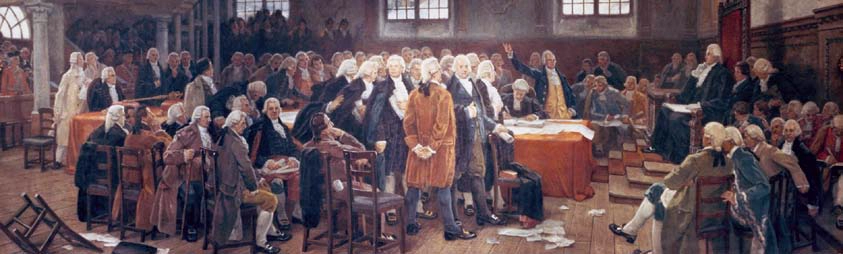
The Constitutional Act split Quebec in two: Upper Canada (later Ontario), mainly Loyalist and English-speaking, and Lower Canada (later Quebec), mainly Catholic and French-speaking.
Why it matters: Each got an elected assembly, and the name Canada became official.
Remember it: One Quebec becomes two Canadas.
Three more firsts from these years: Canada's first elected assembly met in Halifax in 1758. In 1793, Upper Canada became the first province in the British Empire to move toward abolishing slavery. Britain abolished it across the Empire in 1833.
Try first
Answer in your head before you open each card.
0 of 4 known
1759: what happened?
Which law gave Catholics religious freedom and the right to hold public office?
Why did more than 40,000 Loyalists come north?
What did the Constitutional Act of 1791 create?
This era is the easiest to remember, because each event causes the next. Read the chain, then say it back without looking.Discover Canada, Canada's History
From war to self-government
Four links. Each one leads to the next.
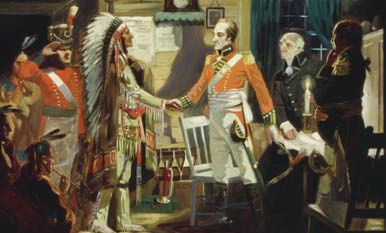
The United States invades. British soldiers, Canadian volunteers and First Nations led by Chief Tecumseh defend Canada. By 1814 the invasion has failed.
Canada stays independent of the United States. But by the 1830s, reformers feel progress toward democracy is too slow.
Armed rebellions near Montreal and in Toronto fail for lack of public support.
Britain sends Lord Durham to report. He recommends uniting the two Canadas and giving them responsible government.
Upper and Lower Canada are united as the Province of Canada.
Reformers La Fontaine and Baldwin in the Canadas, and Joseph Howe in Nova Scotia, push for responsible government.
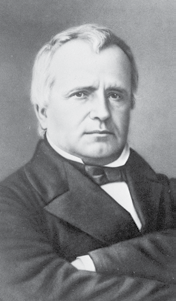
Nova Scotia wins full responsible government first, in 1847–48. United Canada follows in 1848–49, with La Fontaine leading the first responsible government in the Canadas.
Two heroes of 1812 the guide names: Major-General Sir Isaac Brock, who captured Detroit and died at Queenston Heights, and Laura Secord, who walked 30 km in 1813 to warn of an American attack.
Try first
Answer in your head before you open each card.
0 of 4 known
Who led the First Nations that helped defend Canada in 1812?
What did Lord Durham recommend after the rebellions of 1837–38?
1840: what happened?
Which colony won full responsible government first?
Between 1864 and 1867, the Fathers of Confederation from Nova Scotia, New Brunswick and the Province of Canada designed a new country. Within four years it reached the Pacific, and by 1885 a railway tied it together. These are the dates the test leans on most.Discover Canada, Canada's History
1867
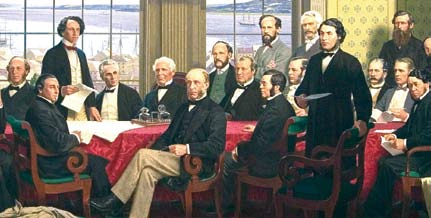
The British North America Act created the Dominion of Canada on July 1, 1867, with Ontario, Quebec, Nova Scotia and New Brunswick. Sir John A. Macdonald became the first Prime Minister.
Why it matters: The birth of the country we know today, and the anchor for every other date.
Remember it: July 1 is Canada Day. It was Dominion Day until 1982.
1870
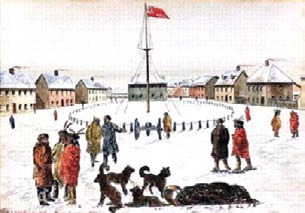
Canada took over the northwest in 1869 without consulting the Métis of the Red River. Louis Riel led an uprising, and in 1870 Canada created the province of Manitoba.
Why it matters: Riel is seen by many as a defender of Métis rights and the father of Manitoba.
Remember it: Confederation plus three: Riel, Red River, Manitoba.
1871
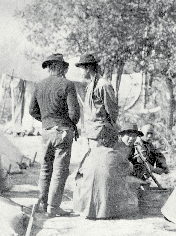
British Columbia joined after Ottawa promised a railway to the West Coast.
Why it matters: The promise became the Canadian Pacific Railway, built by European and Chinese labour.
Remember it: The promise in 1871, the last spike in 1885.
1885
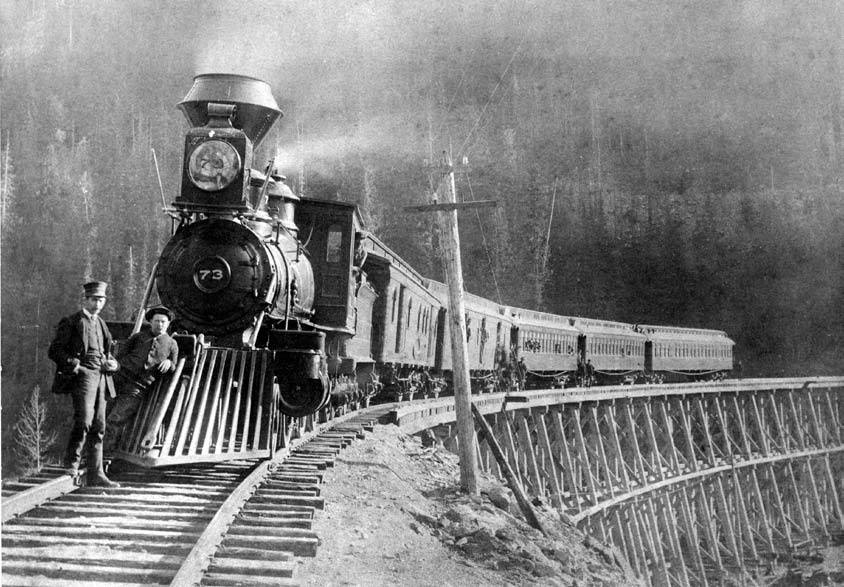
On November 7, 1885, Donald Smith drove the last spike of the Canadian Pacific Railway. The same year, a second rebellion in Saskatchewan led to Riel's trial and execution for high treason.
Why it matters: The railway joined the country from sea to sea. Riel's execution was strongly opposed in Quebec.
Remember it: One year, two sides: joined by rail, divided over Riel.
Once 1867 is solid, the rest of the map is counting.
Count from 1867
Years after Confederation, as each part of Canada joined.
1870 (3 years later) · Manitoba and the Northwest Territories
1871 (4 years later) · British Columbia
1873 (6 years later) · Prince Edward Island
1880 (13 years later) · The Arctic Islands join the Northwest Territories
1898 (31 years later) · Yukon Territory
1905 (38 years later) · Alberta and Saskatchewan
1949 (82 years later) · Newfoundland and Labrador
1999 (132 years later) · Nunavut
Try first
Answer in your head before you open each card.
0 of 4 known
What happened on July 1, 1867?
Which province was created in 1870, and why?
What promise brought British Columbia into Canada in 1871?
Which joined in 1949, and which in 1999?
Canada's part in two world wars built national pride, and during the first war women won the vote. Two national holidays come from this era.Discover Canada, Canada's History
1914
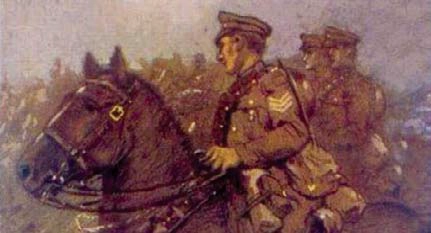
When Britain declared war, Ottawa formed the Canadian Expeditionary Force. More than 600,000 Canadians served, out of a population of eight million.
Why it matters: The war strengthened national pride, especially in English Canada.
Remember it: 600,000 served from a country of 8 million.
April 9, 1917
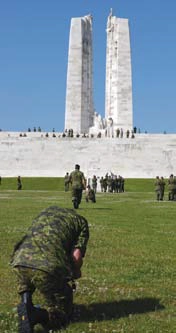
The Canadian Corps captured Vimy Ridge, with 10,000 killed or wounded.
Why it matters: It secured Canadians' reputation for courage. April 9 is Vimy Day.
Remember it: 1917 is exactly 50 years after 1867.
1916–1918
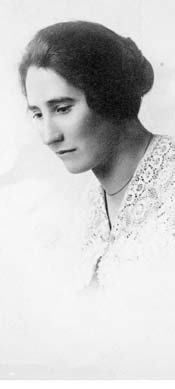
Manitoba was the first province to give women the vote, in 1916. The federal vote followed in 1917 for nurses and soldiers' relatives, and in 1918 for most women aged 21 and over.
Why it matters: Agnes Macphail became the first woman MP in 1921. Quebec gave women the vote in 1940.
Remember it: One province, then the country: 1916, 1917, 1918.
June 6, 1944
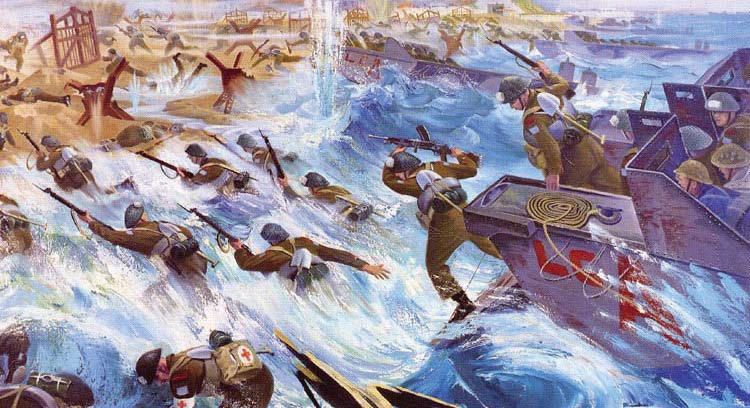
The Second World War began in 1939. On D-Day, 15,000 Canadian troops captured Juno Beach in the invasion of Normandy.
Why it matters: About one in ten Allied soldiers on D-Day was Canadian. Germany surrendered on May 8, 1945.
Remember it: Juno in June, on the 6th day of the 6th month.
The First World War ended with the Armistice on November 11, 1918. That is why Remembrance Day is November 11, and why Canadians observe a moment of silence at the 11th hour of the 11th day of the 11th month.
Try first
Answer in your head before you open each card.
0 of 4 known
How many Canadians served in the First World War?
April 9, 1917: what happened?
Which province was first to give women the vote, and when?
What did Canadian troops capture on June 6, 1944?
After the Second World War, Canada opened the vote to everyone, chose a new flag, made two languages official and wrote its rights into the Constitution. The Modern Canada lesson covers these decades in full.Discover Canada, Modern Canada
1960
Japanese Canadians gained the vote in 1948, and Aboriginal people in 1960.
Why it matters: Today every citizen over the age of 18 may vote.
Remember it: 1948, then 1960: the vote widens after the war.
1965
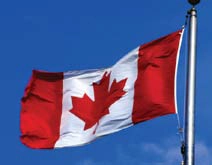
The red-and-white maple leaf flag was raised for the first time, replacing the Canadian Red Ensign after about 100 years.
Why it matters: Red and white had been Canada's national colours since 1921.
Remember it: Two years before Canada's 100th birthday in 1967.
1969
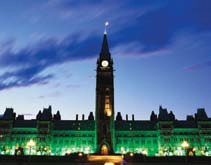
The Act guarantees French and English services in the federal government across Canada. It followed a Royal Commission set up in 1963.
Why it matters: It is the law behind federal services in both official languages.
Remember it: Commission in 1963, Act in 1969.
1982
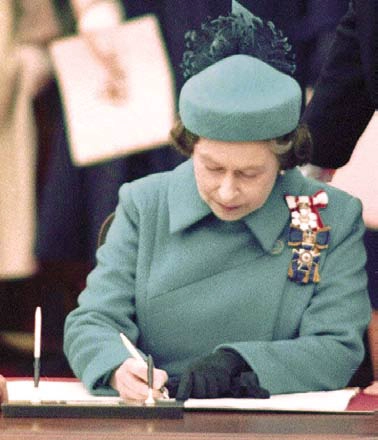
The Constitution was amended to entrench the Charter, without the agreement of Quebec.
Why it matters: The Charter sets out fundamental freedoms and rights such as mobility rights and official language rights.
Remember it: The same year Dominion Day became Canada Day.
Three more dates from these decades: O Canada became the national anthem in 1980, 100 years after it was first sung in Québec City in 1880. Quebec voters rejected sovereignty in referendums in 1980 and 1995.Discover Canada, Rights and Responsibilities of Citizenship·Discover Canada, Canadian Symbols
Try first
Answer in your head before you open each card.
0 of 4 known
When were Aboriginal people granted the vote?
1965: what happened?
What does the Official Languages Act of 1969 guarantee?
What was added to the Constitution in 1982?
Discover Canada lists national public holidays and other important dates in its Canadian Symbols chapter, which the Canadian Symbols lesson covers. Five come straight out of the story above.Discover Canada, Canadian Symbols
January 11
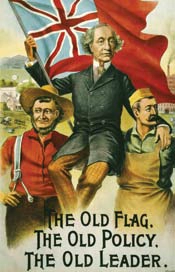
Canada's first Prime Minister was born on January 11, 1815. His portrait is on the $10 bill.
Remember it: The year opens with the first Prime Minister.
April 9
Remembers the capture of Vimy Ridge on April 9, 1917.
Remember it: Fifty years after Confederation.
July 1
The Dominion of Canada was born on July 1, 1867. Until 1982 it was called Dominion Day.
Remember it: The anchor date for everything else.
November 11
The Armistice of November 11, 1918 ended the First World War. Canadians wear the red poppy and honour all who served and died.
Remember it: The 11th hour of the 11th day of the 11th month.
November 20
Laurier was the first French-Canadian prime minister since Confederation. His portrait is on the $5 bill.
Remember it: Macdonald opens the year on the $10, Laurier closes it on the $5.
The full list in the guide, month by month. The coloured ones are the five from the story.
The year at a glance
Five holidays move with the calendar; the rest are fixed dates.
Jan
Feb
Mar
Apr
May
Jun
Jul
Aug
Sep
Oct
Nov
Dec
Order matters as much as the year. Each pair below is close in time.
Which came first?
Pick one in each pair. You'll see why straight away.
0 of 8 answered
Every date on this page, in order, coloured by era. Hide one column, say the answer, then reveal the row to check. Do it in both directions, because the test can ask "What happened in 1867?" or "When was Confederation?".
Every date, one sheet
Choose what to hide, answer each row out loud or on paper, then reveal. Once the order feels easy, mix it.
The cards on this page follow five findings from learning research.
A simple plan
Three short sessions, spread out, beat one long one.
Today
Read and recall
Read the six eras and answer the recall cards under each one. Then try "Which came first?".
In three days
Write the dates
On the review sheet, hide what happened and write it from memory. Then hide the dates and go the other way.
A week later
Check and quiz
Do the sheet once more, then take the Canada's History quiz to see what still slips.
Read the Canada's History lesson for the full story, then take the Canada's History quiz to see which dates you already know. For the dates after 1945, try the Modern Canada quiz, and for the holidays, the Canadian Symbols quiz.
In two or three days, come back to the review sheet, or let a Smart Quiz bring back the questions you missed. To fit this into a weekly routine, follow A Simple Practice Flow. Every date you can recall today is one less to worry about on test day.
Next step
Take the Canada's History quiz today, then come back to the recall cards in two or three days.
Next up:
A Simple Practice Flow for the Canadian Citizenship TestA simple routine for the citizenship test: short quizzes, reviewing explanations and spaced practice, with 2-week and 4-week study plans and tips for test-day nerves.
No. Learn the dates the guide gives weight to, which are the ones on this page, and know what happened and why it mattered. When you understand the story, you can answer a question even when it is worded differently from the guide.
July 1, 1867, the birth of the Dominion of Canada. Use it as your anchor: Manitoba joins 3 years later, Vimy Ridge is 50 years later, and the Charter comes 115 years later.
The national holidays and other important dates in the Canadian Symbols chapter, such as Sir John A. Macdonald Day (January 11), Vimy Day (April 9), Canada Day (July 1), Remembrance Day (November 11) and Sir Wilfrid Laurier Day (November 20). They are all listed on this page.
Learn each date as part of the story around it, recall it before you check, practise in both directions (date to event, and event to date), and review again after a few days.
Only when they carry meaning, like 1917 being 50 years after 1867. Rhymes and made-up codes are harder to keep than the reason an event happened.
On this page
The whole story on one page
1. First contact and New France (1497–1670)
2. Conquest and accommodation (1759–1791)
3. War, rebellion and self-government (1812–1849)
4. Confederation, from sea to sea (1867–1885)
5. The World Wars and the vote (1914–1945)
6. Modern Canada (1960–1982)
Dates on the calendar
Quick check: which came first?
Your review sheet
How to make the dates stick
Your next step
Related reading
How to study Discover Canada for the citizenship test: get the free guide, read it effectively, follow a route through all 11 chapters, and review the hardest ones.
Seven common citizenship test study mistakes and how to fix each one, why practice scores can mislead, and what to do if an attempt didn't go well.
A simple routine for the citizenship test: short quizzes, reviewing explanations and spaced practice, with 2-week and 4-week study plans and tips for test-day nerves.
