Understand the significant events and peoples that have shaped Canada's history.
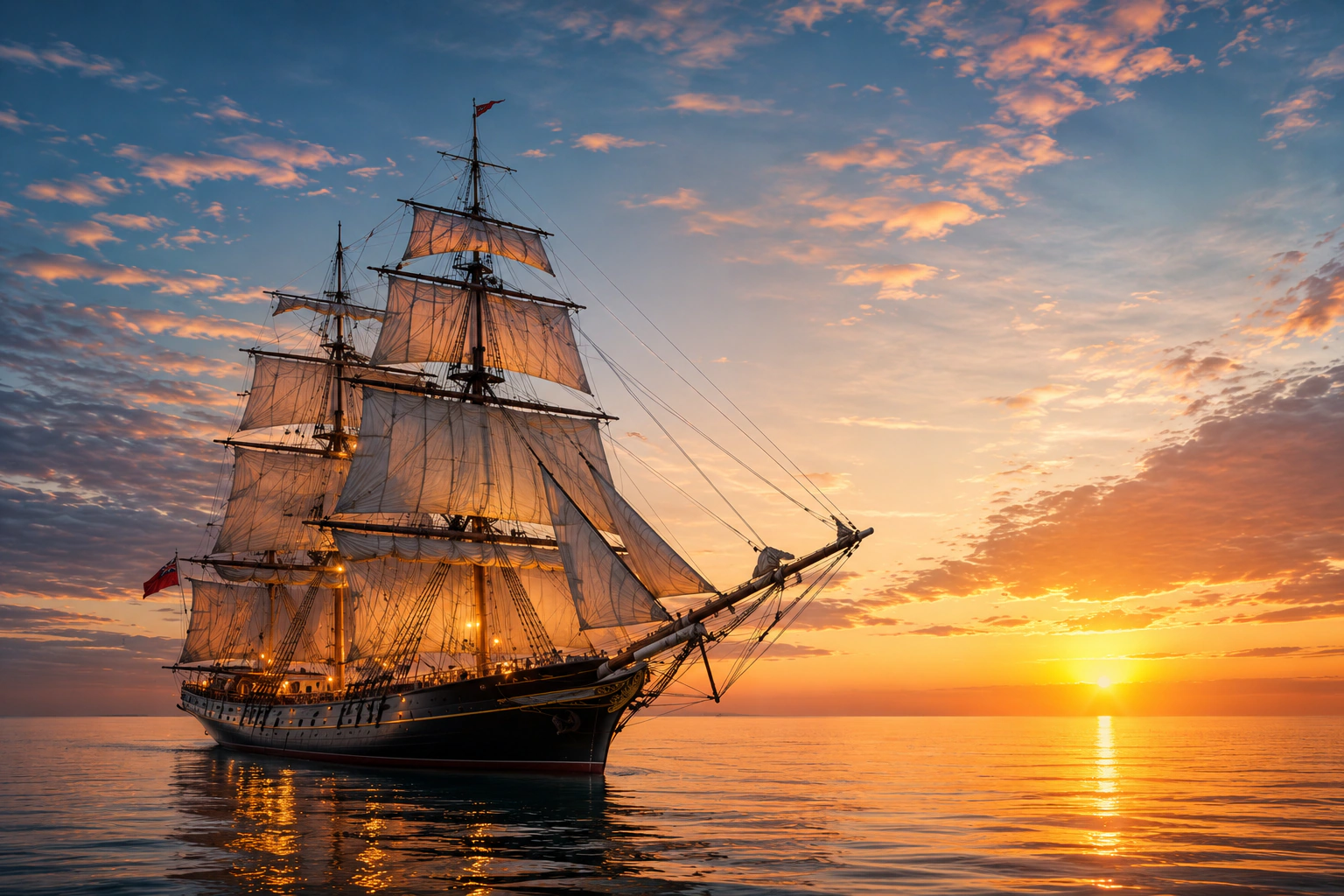
Where Canada's story sets sail.
Chapter map
Key points
Key Points to Remember
Indigenous peoples have lived in Canada for thousands of years and shape its history and identity.
French and British colonisation, and the long rivalry between them, set the stage for modern Canada.
Confederation in 1867 united the provinces into the Dominion of Canada.
Westward expansion and the transcontinental railway tied the new country together.
Canadian contributions in the First and Second World Wars helped define the national identity.
Slide-Based Overview
/ 19
keys
A Journey Through Canada's Past
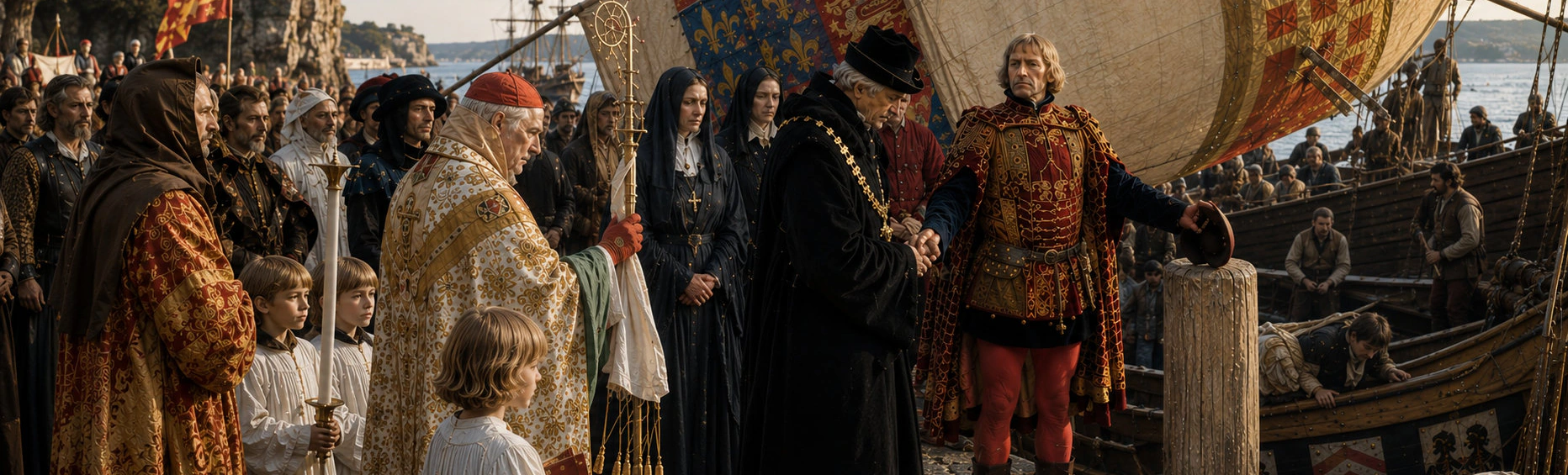
John Cabot, an Italian navigator sailing for England, reached the coast of Newfoundland in 1497, claiming the land for England.
Slide 1 of 19
European Exploration: When Europeans explored Canada, they found all regions occupied by native peoples they called Indians, mistakenly thinking they had reached the East Indies.
Living Off the Land
Indigenous Survival: Indigenous peoples lived off the land: some by hunting and gathering, others by raising crops.
Great Lakes Region: The Huron-Wendat and Iroquois farmed and hunted in the Great Lakes region.
Northwest Hunter-Gatherers: Cree and Dene were hunter-gatherers in the Northwest.
Sioux Nomadism: Sioux were nomadic, following the bison herds.
Inuit Adaptation: Inuit lived off Arctic wildlife.
West Coast Preservation: West Coast natives preserved fish by drying and smoking.
European Impact
Warfare: Warfare was common among Aboriginal groups over land, resources, and prestige.
European Arrival: The arrival of European traders, missionaries, soldiers and colonists changed the native way of life forever.
Disease: Large numbers of Aboriginals died of European diseases to which they lacked immunity.
Aboriginal-European Relations: Aboriginals and Europeans formed strong economic, religious, and military bonds in the first 200 years of coexistence, which laid the foundations of Canada.
Vikings: The Vikings from Iceland reached Labrador and Newfoundland 1,000 years ago.
Exploration and Settlement
L’Anse aux Meadows: The Viking settlement at L’Anse aux Meadows is a World Heritage site.
1497 - John Cabot: In 1497, John Cabot drew the first map of Canada's East Coast.
Cabot’s Claim: Cabot, an Italian immigrant to England, claimed Newfoundland or Cape Breton Island for England.
1610 - English Settlement: English settlement began in 1610.
1534–1542 - Jacques Cartier: Between 1534 and 1542, Jacques Cartier made three voyages to Canada, claiming the land for France.
Naming Canada
'Kanata': Cartier heard two captured guides speak the Iroquoian word 'kanata,' meaning 'village.'
1550s - Name Appears: By the 1550s, the name 'Canada' began appearing on maps.
1604 - First Settlement: In 1604, French explorers established the first European settlement north of Florida.
Early Settlements
St. Croix Island & Port-Royal: Pierre de Monts and Samuel de Champlain established settlements at St. Croix Island and Port-Royal in Acadia.
1608 - Québec City: In 1608, Champlain built a fortress at Québec City.
Alliances: Colonists faced a harsh climate and allied with Indigenous peoples against the Iroquois.
Alliances and Peace
Champlain’s Alliances: Champlain allied with the Algonquin, Montagnais, and Huron against the Iroquois.
1701 - Peace Treaty: The French and Iroquois made peace in 1701.
Fur Trade and Empire
Fur Trade: The French and Aboriginal people collaborated in the fur trade, driven by demand for beaver pelts in Europe.
French Leaders: Leaders like Jean Talon, Bishop Laval, and Count Frontenac expanded the French Empire in North America.
1670 - Hudson’s Bay Company: In 1670, King Charles II of England granted Hudson’s Bay Company exclusive trading rights over the Hudson Bay watershed.
Trading Rivalries
Fur Trade Competition: For the next 100 years, Hudson’s Bay Company competed with Montreal-based traders.
Voyageurs & Coureurs des Bois: Voyageurs and coureurs des bois travelled by canoe and built alliances with First Nations.
Battles for Control
1700s - France vs. Britain: In the 1700s, France and Britain fought for control of North America.
1759 - Plains of Abraham: In 1759, Britain defeated France at the Battle of the Plains of Abraham in Québec City.
Wolfe & Montcalm: Both army commanders, Wolfe (British) and Montcalm (French), were killed in the battle.
Province of Quebec: After the war, Britain renamed the colony the 'Province of Quebec'.
Cultural Preservation
French-Speaking Catholics: French-speaking Catholics (habitants or Canadiens) preserved their way of life in a Protestant, English-speaking British Empire.
1774 - Quebec Act: To govern the French Catholic majority, Britain passed the Quebec Act in 1774, a constitutional foundation of Canada.
Legal and Religious Changes
Catholic Rights: The Act gave Catholics religious freedom and allowed them to hold public office, which Britain itself did not allow at the time.
French Civil Law: It restored French civil law but kept British criminal law.
1776 - American Independence: In 1776, the 13 colonies south of Quebec declared independence, forming the United States.
Migration North
Loyalist Migration: Over 40,000 Loyalists fled to Nova Scotia and Quebec, including thousands of Loyalist Mohawk led by Joseph Brant.
Diversity of Loyalists: Loyalists were diverse in origin and religion.
Black Loyalists: About 3,000 Black Loyalists came seeking a better life. Some later helped found Freetown, Sierra Leone in 1792.
Democratic Development: Democracy in Canada developed gradually and peacefully.
Early Assemblies
1758 - Halifax Assembly: 1758: First elected assembly in Halifax, Nova Scotia.
PEI & NB Assemblies: Prince Edward Island followed in 1773 and New Brunswick in 1785.
Constitutional Changes
1791 Constitutional Act: The 1791 Constitutional Act split Quebec into Upper Canada (English-speaking, Protestant) and Lower Canada (French-speaking, Catholic).
Elected Assemblies: Each had an elected legislative assembly.
'Canada' Official Name: The name 'Canada' became official, and the regions were collectively known as British North America.
Slavery: Slavery existed worldwide, including in the Americas and the British Empire.
Movement to Abolish
Abolitionist Movements: Abolitionist movements began in Britain in the late 1700s.
1793 - Simcoe’s Act: In 1793, Upper Canada took the first step toward abolition under Governor John Graves Simcoe.
Empire-wide Changes
1807 & 1833 - Abolition: In 1807, Britain prohibited the slave trade and abolished slavery across the Empire in 1833.
Underground Railroad: Thousands of escaped slaves reached Canada via the Underground Railroad.
Early Economy: Canada’s early economy was built on the fur trade and resource exports.
Economic Development
Hudson’s Bay Company: The Hudson’s Bay Company dominated the fur trade from Winnipeg to Victoria.
Financial Institutions: Financial institutions emerged in the late 18th and early 19th centuries.
1832 - Montreal Stock Exchange: The Montreal Stock Exchange opened in 1832.
Resource-Based Economy
Farming & Exports: For centuries, the economy focused on farming and exporting fur, fish, and timber via waterways and roads.
War of 1812: The War of 1812 confirmed Canada’s independence from the United States.
Royal Navy Dominance after Trafalgar: Following the British naval victory at Trafalgar, the Royal Navy controlled the seas, which contributed to American resentment and tensions leading to the War of 1812.
Conflict and Defence
Napoleonic Wars: The British Empire fought against Napoleon, sparking American resentment.
1812 - U.S. Invasion: In 1812, the U.S. invaded Canada but was repelled.
Chief Tecumseh: Canadian volunteers and First Nations, led by Chief Tecumseh, supported the defence.
Major-General Brock: Major-General Brock captured Detroit but died at Queenston Heights.
Charles de Salaberry: Charles de Salaberry and 460 soldiers turned back 4,000 U.S. invaders at Châteauguay.
Aftermath and Impact
1813 - York Burned: In 1813, Americans burned York’s Parliament Buildings; Britain retaliated in Washington, D.C.
Canadian Defences: British funded Canadian defences, including Citadels and Fort Henry.
Canada–U.S. Border: The modern Canada–U.S. border partly stems from this war.
Defensive Selection by Wellington: Ottawa was chosen as a key defensive site by the Duke of Wellington, linking the war’s aftermath to Canada’s future capital.
Reform Movements: Reformers in Upper and Lower Canada demanded faster progress toward democracy.
Causes of Rebellion
Republican Ideals: Some wanted republican values or union with the U.S.
Failed Rebellions: Armed rebellions in 1837–38 failed due to lack of support.
Consequences
Defeat of Rebels: Rebels were defeated; some were executed or exiled.
Lord Durham’s Report: Lord Durham recommended uniting the Canadas and granting responsible government.
Assimilation and Reforms
Assimilation Proposal: Durham controversially urged assimilation of French Canadians.
Persistence of French Identity: French identity persisted and reformers like Taché and Cartier became Fathers of Confederation.
1840 - Province of Canada: In 1840, Upper and Lower Canada were united as the Province of Canada.
Early Reforms
La Fontaine, Baldwin & Howe: La Fontaine and Baldwin, along with Joseph Howe in Nova Scotia, promoted responsible government.
Achieving Responsible Government
1847–48 - Nova Scotia: Nova Scotia was the first to achieve full responsible government in 1847–48.
1848–49 - United Canada: United Canada followed in 1848–49 under Lord Elgin.
Parliamentary Confidence: Modern parliamentary systems require the government to resign if it loses confidence.
La Fontaine’s Leadership: La Fontaine was the first leader of a responsible government in the Canadas.
1864–1867 - Confederation: Between 1864 and 1867, provinces worked together with British support to create a new country.
Formation of Canada
Fathers of Confederation: The Fathers of Confederation created a federal and provincial government structure.
Ontario, Quebec, NB, NS: The Province of Canada was split into Ontario and Quebec, joined by New Brunswick and Nova Scotia to form the Dominion of Canada.
Provincial Legislatures: Each province gained its own legislature with control over education and health.
1867 - BNA Act: The British North America Act was passed in 1867, officially creating the Dominion of Canada on July 1.
Canada Day: July 1, formerly Dominion Day, is now celebrated as Canada Day.
Sir Leonard Tilley - 1864: Sir Leonard Tilley proposed the name 'Dominion of Canada' in 1864.
Vision and Inspiration
Psalm 72 Inspiration: Inspired by Psalm 72’s vision of dominion from sea to sea.
Vision for Canada: The phrase embodied a vision of a powerful, united, and free nation.
'Dominion' in Constitution: The term 'Dominion' was written into the Constitution and used for 100 years.
Territorial Growth: Canada expanded westward and northward as new provinces and territories joined.
Key Dates
1867: Ontario, Quebec, Nova Scotia, New Brunswick
1870: Manitoba, Northwest Territories
1871: British Columbia
1873: Prince Edward Island
1880: Arctic Islands transferred to N.W.T.
1898: Yukon Territory
1905: Alberta, Saskatchewan
1949: Newfoundland and Labrador
1999: Nunavut
Sir John A. Macdonald - 1867: Sir John A. Macdonald became Canada’s first Prime Minister in 1867.
Sir John A. Macdonald
Birth & Immigration: Born in Scotland in 1815 and immigrated to Upper Canada as a child.
Kingston Lawyer & Politician: A lawyer from Kingston, Ontario and a skilled politician.
January 11 - Macdonald Day: January 11 is Sir John A. Macdonald Day; his portrait is on the $10 bill.
Sir George-Étienne Cartier
Architect of Confederation: Cartier was a key architect of Confederation from Quebec.
Negotiator: He negotiated the entry of Manitoba, British Columbia, and the Northwest Territories.
Railway Lawyer: A railway lawyer and a patriotic Canadien allied with Macdonald.
1869 - Red River: In 1869, Canada acquired the northwest from the Hudson’s Bay Company without consulting the 12,000 Métis at Red River.
Louis Riel’s Uprising: Louis Riel led an uprising and seized Fort Garry, sparking a national crisis.
Troop Response: Canada responded by sending troops, and Riel fled to the United States.
1870 - Manitoba: In 1870, Canada created Manitoba as a new province to resolve the conflict.
Riel Elected: Riel was later elected to Parliament but never took his seat.
Questions of Unity: The Métis uprising of 1869–70 raised questions about national unity and Canada's ability to govern its vast interior.
Métis Consent: Canada’s seizure of Red River without Métis consent nearly fractured the young Dominion.
Provisional Government: Riel’s seizure of Fort Garry and formation of a provisional government forced Ottawa to take action.
Manitoba Created: The crisis was defused by the creation of Manitoba in 1870, but tensions persisted.
The North-West Rebellion of 1885
1885 - Second Rebellion: As westward settlement resumed, a second rebellion emerged in 1885.
Riel’s Leadership: Riel led Métis and Indigenous forces in Saskatchewan but was defeated, tried, and executed for high treason.
Quebec Outrage: His execution sparked outrage in Quebec and debate over Indigenous rights.
Father of Manitoba: Riel is remembered as a defender of Métis rights and the Father of Manitoba.
Gabriel Dumont: Gabriel Dumont, Riel’s military leader, played a key role in Métis resistance during the 1885 rebellion.
Rise of the North West Mounted Police
1873 - NWMP Founded: In response to unrest, the federal government created the North West Mounted Police in 1873.
Law Enforcement: The NWMP helped settle the West and enforce Canadian law.
Forts Established: They established forts like Calgary and Macleod, with Regina as headquarters.
RCMP Today: Today, they are known as the Royal Canadian Mounted Police (RCMP), iconic in Canadian culture.
Sir Sam Steele: Major General Sir Sam Steele became a legendary Mountie and frontier hero.
NWMP Symbolism: The NWMP symbolized law, order, and Canadian presence across the Prairies.
1871 - BC Joins: British Columbia joined Canada in 1871 after a promise to build a railway to the Pacific.
1885 - Last Spike: Donald Smith, later Lord Strathcona, drove the symbolic 'last spike' in 1885, completing the CPR.
Railway Expansion: The railway enabled Canadian expansion and helped unify the country coast to coast.
Monumental Project: The CPR was a monumental project funded by British and American investors and built by diverse labourers.
Chinese Labour and Discrimination
Chinese Workers: Chinese workers played a key role in building the railway under harsh conditions.
Head Tax Discrimination: After completion, Chinese immigrants faced discrimination including a Head Tax.
2006 Apology: The Government of Canada issued a formal apology in 2006 for this policy.
Harsh Conditions: Chinese railway workers lived in isolated camps and endured extreme hardship and danger.
Economic Boom: Canada's economy boomed in the late 1800s and early 1900s, becoming more industrialized.
Sir Wilfrid Laurier: Sir Wilfrid Laurier, the first French-Canadian Prime Minister, promoted Western immigration.
British & American Immigrants: One million British and one million American immigrants arrived.
Prairie Settlers: Hundreds of thousands of Ukrainians, Poles, Germans, Norwegians, Swedes and others settled the Prairies.
Laurier’s Leadership: Sir Wilfrid Laurier’s leadership in the early 1900s marked an era of prosperity and population growth.
Immigration Policies: His immigration policies brought large numbers of settlers from Europe and the U.S. to Canada’s Prairies.
Laurier on $5 Bill: Laurier’s portrait appears on the $5 Canadian bill as a symbol of his legacy.
1914 - WWI Begins: Canada joined the war in 1914 as part of the British Empire.
Canadian Service: Over 600,000 Canadians served; 60,000 died and 170,000 were wounded.
Major Battles: Canada fought in major battles such as Vimy Ridge and Amiens, earning international respect.
Vimy Ridge and National Identity
April 1917 - Vimy Ridge: In April 1917, Canadian forces captured Vimy Ridge with 10,000 casualties.
Symbol of Unity: The victory became a symbol of Canadian achievement and unity.
April 9 - Vimy Day: April 9 is commemorated as Vimy Day.
Internment and Discrimination
Internment: During the war, over 8,000 people, mostly Ukrainian immigrants, were interned as 'enemy aliens.'
British Advice Ignored: This occurred despite British advice against such policies.
Final Campaigns and Victory
Sir Arthur Currie: Under General Sir Arthur Currie, Canada led decisive battles in the war's last 100 days.
November 11, 1918 - Armistice: The war ended on November 11, 1918 with the Armistice.
Canadian Pride: These efforts strengthened Canadian pride, especially in English Canada.
Post-WWI Change: Following the First World War, Canada experienced significant social and political changes.
The Interwar Years
British Commonwealth: After WWI, the British Empire transformed into the British Commonwealth of Nations, with Canada as a leading member.
1920s Growth & 1929 Crash: The 1920s saw economic growth and low unemployment, but the 1929 stock market crash triggered the Great Depression.
1933 - Unemployment: By 1933, unemployment reached 27%, and prairie farmers faced drought and falling grain prices.
1934 - Bank of Canada: The Bank of Canada was created in 1934 to stabilize the financial system.
Social Programs: Social demands grew for programs like unemployment insurance, minimum wages, and a standard work week.
Immigration and Discrimination
Depression-Era Restrictions: Immigration fell during the Depression, and refugees, including Jews fleeing Nazi Germany, were often turned away.
Canada in the Second World War
1939 - WWII Declaration: Canada declared war on Nazi Germany in 1939 and joined the Allied forces to defeat tyranny in Europe and Asia.
Canadian Service: More than one million Canadians and Newfoundlanders served; 44,000 were killed.
Key Battles: Canadian forces participated in the defence of Hong Kong (1941), the Dieppe Raid (1942), and the liberation of Italy and the Netherlands.
D-Day - Juno Beach: On D-Day, June 6, 1944, Canadians captured Juno Beach in the Allied invasion of Normandy.
Battle of the Atlantic: Canada played a key role in the Battle of the Atlantic and trained 130,000 Allied air crew under the British Commonwealth Air Training Plan.
Third-Largest Navy: At the end of the war, Canada had the world’s third-largest navy.
Discrimination and Apologies
Japanese Canadian Internment: During WWII, Japanese Canadians were forcibly relocated and had their property sold without compensation.
1988 Apology: The government later apologized in 1988 and provided compensation to the victims.
Phil Edwards – Symbol of Diversity and Excellence: Phil Edwards, a Black Canadian Olympian and WWII medical officer, symbolized Canada’s diversity and excellence between the wars.
Boer War and National Pride: Canada’s participation in the Boer War (1899–1902) marked its emergence in international conflict and pride.
Key points
Key Points to Remember
Indigenous peoples have lived in Canada for thousands of years and shape its history and identity.
French and British colonisation, and the long rivalry between them, set the stage for modern Canada.
Confederation in 1867 united the provinces into the Dominion of Canada.
Westward expansion and the transcontinental railway tied the new country together.
Canadian contributions in the First and Second World Wars helped define the national identity.
Gallery
Jump to era
Early Peoples & First Contact
New France & British Era
Toward Nationhood
Confederation & Expansion
World Wars Era
FAQs
Early History and Indigenous Peoples
The first people to live in Canada were Aboriginal peoples, including groups like the Huron-Wendat, Cree, Dene, Sioux, Inuit, and West Coast natives.
European contact changed Aboriginal life forever; many died from European diseases, but they also formed strong economic, religious, and military bonds with Europeans.
John Cabot, an Italian immigrant to England, was the first to map Canada’s Atlantic shore in 1497.
The name 'Canada' comes from the Iroquoian word 'kanata', meaning 'village'.
Jacques Cartier made three voyages between 1534 and 1542, claiming land for France and exploring the St. Lawrence River.
The Quebec Act allowed religious freedom for Catholics, restored French civil law, and helped accommodate the French majority in the British Empire.
United Empire Loyalists were people loyal to the British Crown who fled the American Revolution to settle in Canada.
Joseph Brant led thousands of Loyalist Mohawk Indians into Canada.
Nova Scotia elected the first representative assembly in 1758.
Upper Canada moved toward abolition in 1793, and slavery was abolished throughout the British Empire in 1833.
Confederation and National Development
The Dominion of Canada was established on July 1, 1867.
Sir John A. Macdonald became Canada’s first Prime Minister in 1867.
British Columbia joined Canada in 1871 after Ottawa promised to build a railway to the West Coast.
The last spike of the Canadian Pacific Railway was driven in 1885, symbolizing unity and the completion of the railway from sea to sea.
Louis Riel led an uprising in 1869 because the Métis were not consulted when Canada took over their land; it resulted in the creation of Manitoba.
Responsible government means that the Crown’s ministers must have the support of a majority of elected representatives in order to govern.
The War of 1812 was fought between Canada (under British rule) and the United States, which tried to invade Canada and failed.
Canadian volunteers, First Nations, and British troops, including Chief Tecumseh and Major-General Sir Isaac Brock, defended Canada.
The Royal Canadian Mounted Police originated as the North West Mounted Police, established in 1873 to bring law to the West.
Sir Wilfrid Laurier was the first French-Canadian Prime Minister, elected in 1896.
Wars and Women’s Rights
In April 1917, Canadian troops captured Vimy Ridge, a key victory in the First World War. It marked Canada’s coming of age as a nation.
More than 600,000 Canadians served in the First World War, and 60,000 lost their lives.
Remembrance Day is observed on November 11 to honour Canadians who died in military service. Canadians pause for a moment of silence at 11 a.m.
Written by Lieutenant-Colonel John McCrae in 1915, the poem honours fallen soldiers and is often recited on Remembrance Day.
In 1916, Manitoba became the first province to grant women the right to vote. Federally, most women gained this right in 1918.
Agnes Macphail, a farmer and teacher, was elected in 1921 as Canada’s first woman MP.
The Second World War and Its Aftermath
Canada joined the war in 1939 after Nazi Germany invaded Poland and Britain declared war. Canada acted independently but in support of the Allies.
On June 6, 1944, 15,000 Canadian troops stormed and captured Juno Beach during the Allied invasion of Nazi-occupied France.
More than one million Canadians served in the Second World War; 44,000 were killed.
Canada trained over 130,000 Allied pilots and crew under the British Commonwealth Air Training Plan, making a major contribution to the air war.
During the war, Japanese Canadians were forcibly relocated and their property was sold without compensation. The government apologized in 1988.
The Royal Canadian Navy protected merchant convoys in the Battle of the Atlantic. By war’s end, it was the third-largest navy in the world.
Expansion and Immigration
The railway linked Canada from coast to coast and helped unite the country. The last spike was driven in 1885 in British Columbia.
The Head Tax was a discriminatory fee imposed on Chinese immigrants. Canada apologized for this policy in 2006.
Louis Riel led the Métis resistance during two uprisings and is remembered as a founder of Manitoba and defender of Métis rights.
They were French-Canadian fur traders who formed alliances with First Nations and explored vast areas of North America.
In the late 1800s and early 1900s, large numbers of immigrants, including Ukrainians, Poles, and Germans, settled and developed agriculture in the West.
Sir Wilfrid Laurier was Canada’s first French-Canadian Prime Minister and promoted immigration and national unity.
Path to Modern Canada
These were armed uprisings in Upper and Lower Canada by reformers who felt political progress was too slow. They were defeated but led to major reforms.
Lord Durham recommended uniting Upper and Lower Canada and introducing responsible government—where elected leaders must have majority support.
It means the executive branch must maintain the confidence of the elected assembly or resign—this remains the foundation of Canadian democracy.
Sir Louis-Hippolyte La Fontaine, a defender of French language rights, led the first responsible government in 1849.
They were leaders from various colonies who worked between 1864 and 1867 to unite the provinces into the Dominion of Canada.
July 1, 1867 marks the birth of the Dominion of Canada, now celebrated as Canada Day.
Practice
Feel ready?
Try the full practice test or explore your next lesson to keep building your confidence.
🇨🇦 This lesson is inspired by official content from the Discover Canada guide by the Government of Canada.

