
Canada’s Economy
Discover Canada says Canada’s economy includes three main types of industries: services, manufacturing and natural resources. Learn how they differ and why trade matters.
What's inside
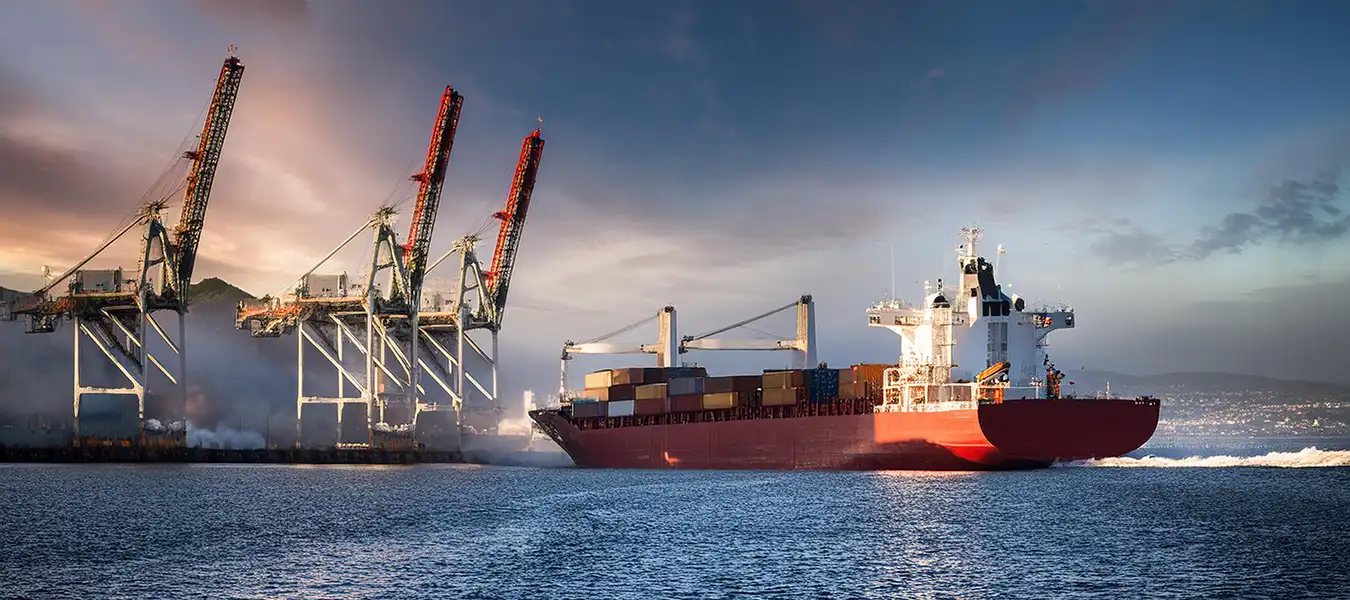
A red container ship passes tall cranes at a port under a grey sky.
Slide-Based Overview
/ 07
keys
Four parts
Canada’s Economy at a Glance
Slide 1 of 7
Key points
17Key Points to Remember
Read these points, then try the lesson quiz.
Show key pointsHide key points
Key points
17Key Points to Remember
Read these points, then try the lesson quiz.
Show key pointsHide key pointsA trading nation: Canada has always been a trading nation. Commerce remains the engine of economic growth, the guide says.
The standard of living: Canadians could not maintain their standard of living without engaging in trade with other nations.
Free trade with the United States: Enacted in 1988. Today’s agreement is CUSMA, in force since July 1, 2020.
Mexico and NAFTA: Mexico became a partner in 1994 in the North American Free Trade Agreement (NAFTA), with over 444 million people and over $1 trillion in merchandise trade in 2008.
The ten largest: Canada has one of the ten largest economies in the world.
The G8 in the guide: Canada is part of the G8 group of leading industrialized countries, with the United States, Germany, the United Kingdom, Italy, France, Japan and Russia. Today the group is the G7, without Russia, since 2014.
Three main types of industries: Service industries, manufacturing industries and natural resources industries.
Service industries: Transportation, education, health care, construction, banking, communications, retail services, tourism and government. More than 75% of working Canadians have service jobs.
Manufacturing industries: Make products to sell in Canada and around the world: paper, high technology equipment, aerospace technology, automobiles, machinery, food, clothing and many other goods.
The largest trading partner: The United States is Canada’s largest international trading partner, and each is the other’s largest trading partner.
Natural resources industries: Forestry, fishing, agriculture, mining and energy. They have played an important part in Canada’s history and development, and many areas still depend on them.
Exports: A large percentage of Canada’s exports are natural resources commodities. Over three-quarters of Canadian exports go to the United States.
The biggest bilateral trading relationship: Canada and the United States have the biggest bilateral trading relationship in the world. Integrated Canada-U.S.A. supply chains compete with the rest of the world.
What Canada exports: Energy products, industrial goods, machinery, equipment, automotive, agricultural, fishing and forestry products, and consumer goods, worth billions of dollars every year.
The undefended border: Millions of Canadians and Americans cross every year, in safety, what is traditionally known as “the world’s longest undefended border.”
The Peace Arch: At Blaine, Washington. Inscribed “children of a common mother” and “brethren dwelling together in unity.” It symbolizes close ties and common interests with the United States.
The photos: Oil pumpjacks in southern Alberta; Atlantic lobster; a hydro-electric dam on the Saguenay River, Quebec; a lumber truck; a car assembly plant in Oakville, Ontario; the Port of Vancouver; a research laboratory; RIM’s BlackBerry; ice wine grapes in the Niagara Region, Ontario; the Peace Arch.
Read
A trading nation: The guide says Canada has always been a trading nation. Trade means buying and selling goods and services with other countries.
The engine of growth: The guide says commerce (trade and business) remains the engine of economic growth. An engine is what makes a machine go: the guide means trade is what makes the economy grow.
The standard of living: The guide says that, as Canadians, we could not maintain (keep) our standard of living without trade with other nations. The guide’s words are “without engaging in trade”, which means taking part in it. The standard of living is how well people live: their incomes, homes and services.
Free trade in 1988: In 1988, Canada enacted free trade with the United States. To enact means to make into law. Free trade is trade between countries with few or no taxes on the goods that cross the border.
Mexico and NAFTA in 1994: Mexico became a partner in 1994 in the broader (wider) North American Free Trade Agreement (NAFTA). An agreement is a deal between countries, and a partner is a country that takes part in it.
NAFTA’s size: The guide says NAFTA covered over 444 million people and over $1 trillion in merchandise trade in 2008. Merchandise means goods: things that are made or grown and sold. A trillion is a thousand billion.
One of the ten largest: The guide says that today Canada has one of the ten largest economies in the world. An economy is all the work, business and trade of a country.
The G8 group: The guide says Canada is part of the G8 group of leading industrialized countries, with the United States, Germany, the United Kingdom, Italy, France, Japan and Russia. G8 means the Group of Eight. Industrialized countries are countries with many factories and industries.
What the guide says, and what is true today
Free trade with the United States: The Canada–United States Free Trade Agreement was signed in January 1988 (Canada Treaty Series). It came into force on January 1, 1989 (Global Affairs Canada). The guide’s “enacted in 1988” is the test wording.
NAFTA and CUSMA: NAFTA came into force on January 1, 1994. On July 1, 2020, it was replaced by the Canada–United States–Mexico Agreement (CUSMA), which keeps free trade between the three countries (Global Affairs Canada). The guide’s NAFTA, 444 million and $1 trillion are its figures for 2008: learn them for the test.
The G8 and the G7: Russia’s part in the group was suspended (stopped) in March 2014. Since then the group has met as the G7, the Group of Seven: Canada, the United States, Germany, the United Kingdom, Italy, France and Japan. Canada hosted the G7 summit (a meeting of the leaders) in Kananaskis, Alberta, in June 2025 (Global Affairs Canada). The guide’s eight names are the test list.
Among the ten largest: The International Monetary Fund (IMF) ranks economies by their size in U.S. dollars. In its World Economic Outlook of October 2026, Canada was tenth in 2025. The IMF expects Canada to be eleventh in 2026. The guide’s “one of the ten largest” is the test wording.
Other lessons: The Modern Canada lesson says Canada drew closer to the United States and other trading partners after 1945. The Canada’s History lesson tells of the fur trade and the Hudson’s Bay Company, Canada’s first big trade.
Three types: The guide says Canada’s economy includes three main types of industries: service industries, manufacturing industries and natural resources industries. An industry is a kind of work or business.
How to tell them apart: Service industries do work for people. Manufacturing industries make things. Natural resources industries take things from the land and the sea.
Service industries
What they do: Service industries provide services, which are work done for people, rather than goods. The guide says they provide thousands of different jobs.
The nine areas: The guide lists transportation, education, health care, construction, banking, communications, retail services (shops and stores), tourism and government.
More than 75%: The guide says more than 75% of working Canadians now have jobs in service industries. That is more than three out of every four workers.
Manufacturing industries
What they do: Manufacturing industries make products (goods) to sell in Canada and around the world. To manufacture is to make things, usually in a factory.
The products: The guide lists paper, high technology equipment, aerospace technology (aircraft and spacecraft), automobiles (cars), machinery (machines), food, clothing and many other goods.
The largest trading partner: The guide says our largest international trading partner is the United States. A trading partner is a country we trade with.
Natural resources industries
What they are: Natural resources are things that come from nature, such as trees, fish, soil, minerals and oil. The guide lists forestry (growing and cutting trees), fishing, agriculture (farming), mining and energy.
History and development: The guide says these industries have played an important part in the country’s history and development.
Still important today: The guide says the economy of many areas of the country still depends on developing natural resources.
Exports: The guide says a large percentage of Canada’s exports are natural resources commodities. Exports are goods sold to other countries. Commodities are raw materials and farm products sold in large amounts, such as oil, lumber and wheat.
What the guide says, and what is true today
Service jobs today: About four in five working Canadians have service jobs: 80% in 2025, in the International Labour Organization’s estimate (ILO, published by the World Bank). Statistics Canada’s Labour Force Survey reports the Canadian figure each month. The guide’s “more than 75%” is the test wording.
Other lessons: The Canada’s Regions lesson says which region has which industry, such as Alberta’s oil and gas and the Atlantic fishery. The Modern Canada lesson tells the story of Research in Motion and the BlackBerry.
Close relations: The guide says Canada enjoys close relations with the United States, and each is the other’s largest trading partner.
Over three-quarters of exports: The guide says over three-quarters of Canadian exports are destined for (sent to) the U.S.A. Three-quarters is 75 out of every 100.
The biggest bilateral trading relationship: The guide says, “In fact we have the biggest bilateral trading relationship in the world.” Bilateral means between two countries.
Integrated supply chains: The guide says integrated Canada-U.S.A. supply chains compete with the rest of the world. A supply chain is the chain of steps that turns materials into a product and brings it to the buyer. Integrated means joined together: parts can cross the border several times before a product is finished.
What Canada exports: The guide says Canada exports billions of dollars worth of energy products, industrial goods, machinery, equipment, automotive, agricultural, fishing and forestry products, and consumer goods every year. Automotive means cars and their parts; agricultural means from farms; consumer goods are things people buy for themselves, such as clothes and furniture.
The world’s longest undefended border: The guide says millions of Canadians and Americans cross the border every year, and in safety. The guide calls it “what is traditionally known as ‘the world’s longest undefended border.’” Undefended means not guarded by soldiers. Traditionally known as means people have long called it that.
The Peace Arch
Where it is: The Peace Arch stands at Blaine, in the State of Washington, on the border between Canada and the United States. An arch is a curved structure, like a gateway.
The inscriptions: The arch is inscribed (has words carved into it) with two phrases. They are “children of a common mother” and “brethren dwelling together in unity.” Brethren is an old word for brothers; dwelling means living; unity means being together as one.
What it symbolizes: The guide says the Peace Arch symbolizes (stands for) our close ties and common interests with the United States. Ties are connections; common interests are things both countries want.
What the guide says, and what is true today
Still the largest partner: The United States is still Canada’s largest trading partner, and Canada is the second-largest partner of the United States (Global Affairs Canada). In 2025, 72.5% of Canada’s merchandise exports went to the United States, down from 76.3% in 2024 (Global Affairs Canada, Office of the Chief Economist). The guide’s “over three-quarters” and “each is the other’s largest” are the test wording.
Tariffs in 2025: In March 2025 the United States put tariffs (taxes on imported goods) on Canadian goods. Canada answered with tariffs of its own. On September 1, 2025, Canada removed most of them, keeping those on steel, aluminum and automobiles while talks went on (Department of Finance Canada). The situation keeps changing. For the test, learn the guide’s sentences.
The border: The border (the boundary line) between Canada and the United States is 8,891 kilometres long (International Boundary Commission). “The world’s longest undefended border” is the guide’s phrase.
The Peace Arch today: It was dedicated (opened with a ceremony) on September 6, 1921 (Veterans Affairs Canada). The words “children of a common mother” face the United States, and “brethren dwelling together in unity” face Canada. It stands at the Douglas border crossing, between Surrey, British Columbia and Blaine, Washington, with a park on each side of the border (BC Parks; Washington State Parks).
The guide’s photos: The chapter has 10 photos in five groups. Their captions (the words under a photo) are the guide’s own words, and the quiz may ask about them. The gallery below shows each one.
Three resources: The first group shows “Oil pumpjacks in southern Alberta”, “Atlantic lobster” and a “Hydro-electric dam on the Saguenay River, Quebec”. A pumpjack is a machine that pumps oil up from under the ground. A hydro-electric dam makes electricity from falling water. Energy, fishing and energy again: two of the five natural resources industries.
Lumber truck: A truck carrying logs. Lumber is wood cut for building. Forestry is one of the five natural resources industries.
Car assembly plant and port: The next pair shows a “Car assembly plant in Oakville, Ontario” and the “Port of Vancouver”. An assembly plant is a factory where cars are put together from their parts: manufacturing. A port is where ships load and unload goods: trade.
Laboratory, BlackBerry and grapes: The next group shows a “Research laboratory”, “RIM’s BlackBerry” and “Ice wine grapes, Niagara Region, Ontario”. A laboratory is a room for science work. RIM is Research in Motion, the company that made the BlackBerry phone. Ice wine is a sweet wine made from grapes picked after they freeze on the vine.
The Peace Arch: The last photo shows “The Peace Arch, Blaine, Washington”, the arch described in Part 3.
What the guide says, and what is true today
Alberta’s oil: The Canada’s Regions lesson says Alberta is the largest producer of oil and gas. It also says the oil sands in the north of the province are being developed as a major energy source. The photo shows pumpjacks in the south.
Atlantic lobster: Lobster was Canada’s most valuable seafood export in 2025, worth over $3 billion (Fisheries and Oceans Canada).
The Port of Vancouver: The Canada’s Regions lesson says the Port of Vancouver is Canada’s largest and busiest port and our gateway to the Asia-Pacific.
Research in Motion: The company changed its name to BlackBerry Limited in 2013, as the Modern Canada lesson says. In 2016 the company said it had become a software company (BlackBerry). The guide’s caption, “RIM’s BlackBerry”, is the test wording.
The Oakville plant: The photo is credited to Ford of Canada. In 2024 Ford announced it would rebuild its Oakville Assembly Complex to assemble (put together) pickup trucks from 2026 (Ford of Canada).
Gallery
Canada’s Economy
A Trading Nation
Three Main Types of Industries
Canada and the United States
FAQs
Frequently Asked Questions
Studying this chapter
Discover Canada groups them into service industries, manufacturing industries and natural resources industries. Services include education and banking; manufacturing makes goods such as cars and clothing; natural resources industries include forestry, farming, fishing, mining and energy. Part 2 explains each group.
Both. The guide says the G8, with Russia. Today the group is the G7, without Russia, since 2014. Learn the guide’s eight names for the test, and know today’s name (Part 1).
No. The Canada–United States–Mexico Agreement (CUSMA) replaced it on July 1, 2020. The guide’s NAFTA sentence is still the test content (Part 1).
Yes. The quiz asks which list goes with which type of industry, and what Canada exports. Slide 4 holds the three industry lists and slide 5 the export list (Part 2 and Part 3).
A few. The quiz asks where the pumpjacks are and which port is pictured. Part 4 lists all ten captions.
Common mix-ups
No. Mining is one of the five natural resources industries, with forestry, fishing, agriculture and energy. Service industries do work for people, such as education, health care and banking (Part 2).
No. They are the guide’s figures for the three NAFTA countries in 2008. The lesson does not give today’s figures, because they change every year (Part 1).
At Blaine, in the State of Washington, on the border south of Surrey, British Columbia. The lesson puts it in Part 3, Canada and the United States, because it symbolizes the two countries’ close ties.
Yes. The guide says over three-quarters of Canadian exports. In 2025 the share was 72.5%, Global Affairs Canada says, and the United States is still by far the largest partner (Part 3).
Related lessons
Practice
Test what you've learned
Answer questions on this lesson without looking back. Recalling on your own helps you remember.
about 3 min for 5 questions
Up next
Canada’s RegionsThe five regions, the ten provinces and three territories with their capitals, and what the guide says about each one.
🇨🇦 This lesson is inspired by official content from the Discover Canada guide by the Government of Canada.