Explore Canada’s legal system, how laws are made and enforced, and the roles of courts, police, and legal support services.
What's inside

Open doors, open courts.
Key points
Key Points to Remember
Justice Principles: Everyone in Canada is guaranteed due process and presumed innocent until proven guilty.
Rule of Law: The legal system applies equally to all, including government officials and law enforcement.
Justice in Action: Courts settle disputes, while the police enforce laws and provide public assistance.
Legal Support: Legal aid ensures access to justice for those who need it.
Corrections: Prisons serve as tools for enforcing the law, punishing offenders, and preventing future crimes.
Slide-Based Overview
/ 09
keys
Canada’s Framework of Law and Fairness
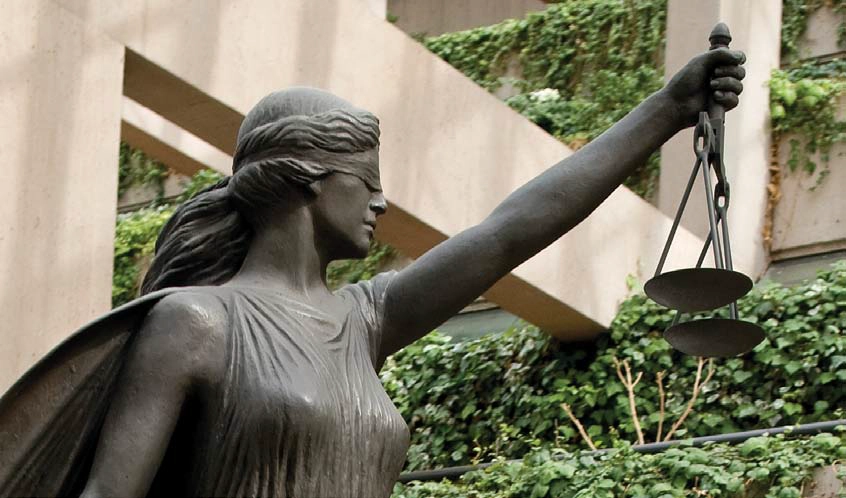
Scales of Justice, Vancouver Law Courts. The blindfolded Lady Justice symbolizes the impartial manner in which our laws are administered: blind to all considerations but the facts.
Legal Foundations
Presumption of Innocence: Every individual is considered innocent until proven guilty in a court of law.
Due Process: All people are guaranteed fair treatment and respect for legal rights under Canadian law.
Principles of Justice
Canada’s legal system is rooted in the rule of law, democratic principles, and freedom under the law.
Slide 1 of 9
Presumption of Innocence: Everyone is considered innocent until proven guilty in a court of law.
Due Process: The government must respect all the legal rights a person is entitled to under the law.
Legal Heritage: Canada’s legal system is rooted in the rule of law, freedom under the law, democratic principles, and due process.
Organized System: Canada is governed by written laws designed to guide conduct in society.
Lawmakers: These laws are made by elected representatives.
Universal Application: Laws apply to everyone—judges, police officers, and politicians included.
Peaceful Conflict Resolution: Laws exist to provide order and a peaceful way to settle disputes.
Reflection of Values: Canada’s laws express the values and beliefs of its people.
Supreme Court: The Supreme Court of Canada is the highest court in the country.
Federal Court: The Federal Court of Canada deals with legal matters involving the federal government.
Provincial and Specialized Courts
Appeal and Trial Courts: Found in most provinces and sometimes called the Court of Queen’s Bench or the Supreme Court.
Provincial Courts: Deal with lesser offences, family matters, and other legal issues.
Specialized Courts: Include traffic courts and small claims courts for civil cases involving small sums of money.
Public Protection: The police are there to keep people safe and enforce the law.
Seeking Help: You can ask the police for help with accidents, theft, assault, witnessing a crime, or reporting a missing person.
Types of Police Forces
Provincial Police: Exist in Ontario and Quebec.
Municipal Police: Found in all provinces and serve local communities.
RCMP: The Royal Canadian Mounted Police enforce federal laws throughout Canada and serve as the provincial police in all provinces and territories except Ontario and Quebec. They also serve in some municipalities.
Police Accountability
Raising Concerns: Citizens have the right to question police service or conduct.
Complaint Process: Most police forces in Canada have a formal process for addressing public complaints and taking appropriate action.
Legal Representation: Lawyers can assist with legal issues and represent individuals in court.
Legal Aid: Free or low-cost legal aid services are available in most communities for people who cannot afford a lawyer.
Punishment and Deterrence: Prisons play a vital role in punishing criminals and deterring crime.
Public Protection: Prisons support society by holding offenders accountable and helping maintain safety.
Key points
Key Points to Remember
Justice Principles: Everyone in Canada is guaranteed due process and presumed innocent until proven guilty.
Rule of Law: The legal system applies equally to all, including government officials and law enforcement.
Justice in Action: Courts settle disputes, while the police enforce laws and provide public assistance.
Legal Support: Legal aid ensures access to justice for those who need it.
Corrections: Prisons serve as tools for enforcing the law, punishing offenders, and preventing future crimes.
Gallery
FAQs
Foundations of Justice and Legal Rights
It means that everyone must follow the law, including government officials.
It’s the legal right to fair treatment under the law for all individuals.
It means a person is considered innocent until proven guilty in a court of law.
Legal rights protect individuals' freedoms and ensure fair treatment under the law.
Yes, through the Constitution and the Canadian Charter of Rights and Freedoms.
The blindfold represents impartiality—justice is based only on facts.
Yes, legal protections apply to everyone in Canada.
It means your rights are protected by laws that apply to everyone equally.
Everyone, including judges, police, and elected officials.
Fairness ensures equal treatment and protects the rights of all citizens.
Laws and Lawmakers in Canada
Laws are made by elected representatives in the government.
They help keep order, resolve disputes, and reflect society's values.
They define acceptable behavior and provide peaceful ways to settle conflicts.
Yes. Elected governments can revise or create new laws as needed.
No. Police must follow the same laws as every other Canadian.
They may be charged and must appear in court to determine guilt or innocence.
Law enforcement involves enforcing laws and maintaining public order.
Courts ensure that laws are interpreted and applied fairly to everyone.
They are designed to promote fairness, respect, and peaceful coexistence.
Because the law applies equally to everyone in Canada.
Police and Public Safety
They enforce laws, respond to emergencies, and help maintain public safety.
Yes. You can contact them in emergencies or if you're a victim of crime.
The Royal Canadian Mounted Police enforce federal laws and serve as provincial police in most provinces.
Only Ontario and Quebec have their own provincial police forces.
Police departments operated by cities and towns to enforce local laws.
Yes. Most forces have complaint systems to address public concerns.
Report it to the police immediately.
Yes. Complaints can lead to investigations of police conduct.
When police build relationships with the public to promote safety and trust.
They inspect entries into Canada and enforce customs and immigration laws.
Courts, Trials, and Legal Support
It is the highest court in the country and makes final legal decisions.
It handles cases involving the federal government and specific national issues.
Trial courts, appeal courts, family courts, traffic courts, and small claims courts.
Judges, lawyers, clerks, and sometimes juries participate in trials.
A group of citizens that decides guilt or innocence in serious criminal trials.
Legal aid services offer free or low-cost legal help to those in need.
They give legal advice and represent clients in court.
A legal proceeding to decide if someone is guilty or not based on evidence.
They punish offenders and help deter criminal behavior.
To lead court proceedings and ensure fairness under the law.
Practice
Feel ready?
Try the full practice test or explore your next lesson to keep building your confidence.
Up next
Canadian Symbols
Flags, anthems, holidays, and symbols commonly referenced in Discover Canada.
🇨🇦 This lesson is inspired by official content from the Discover Canada guide by the Government of Canada.

