Understand the unique identity, heritage, and diversity of Canada.
What's inside
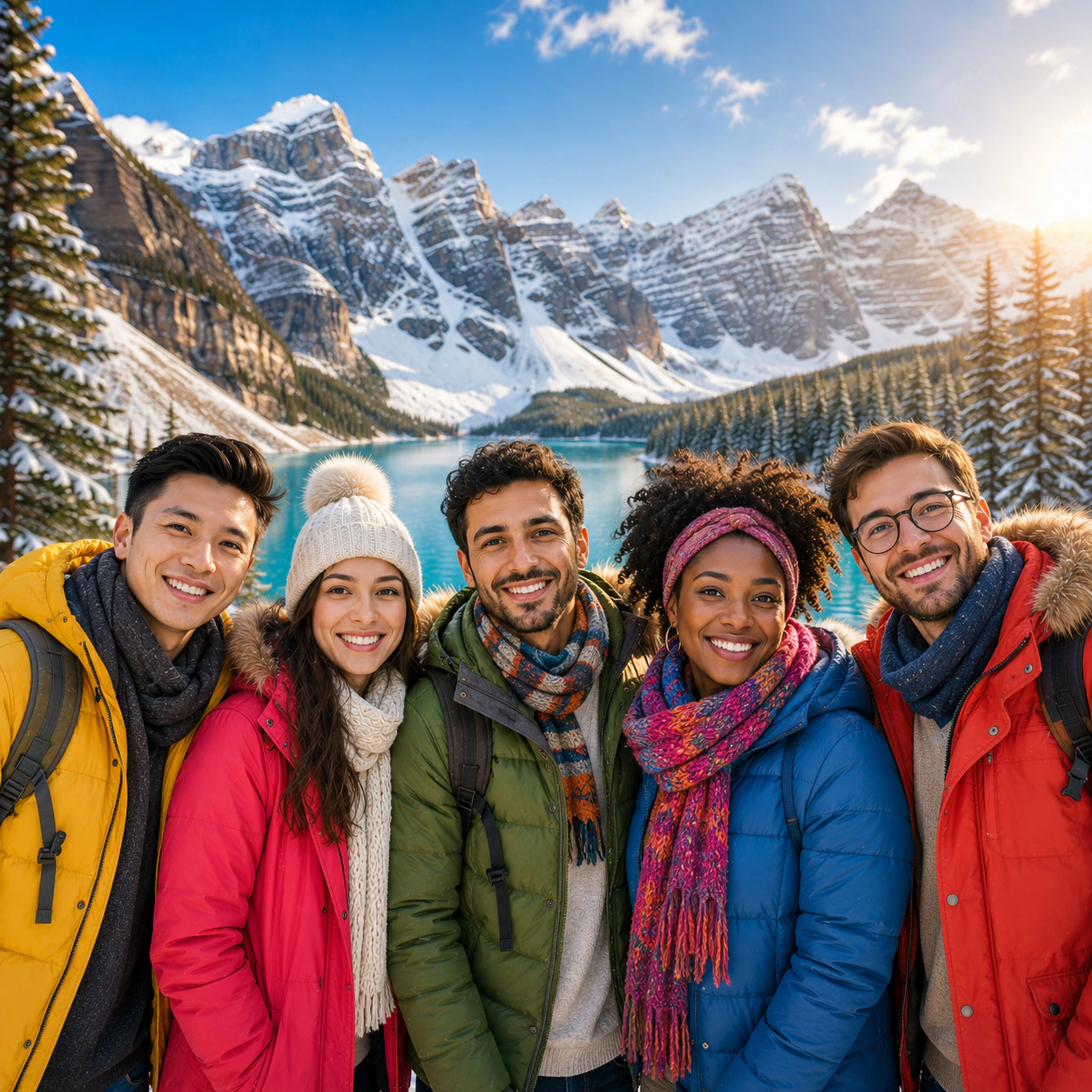
Canada’s strength is its diversity.
Key points
Key Points to Remember
Canada’s identity is rooted in its founding peoples, constitutional monarchy, and commitment to peace and good governance.
Aboriginal rights are enshrined in the Constitution.
English and French are the official languages.
Canada is a multicultural, inclusive society where immigrants contribute to progress.
Religious freedom and LGBTQ+ rights are fully protected under Canadian law.
Slide-Based Overview
/ 09
keys
Understanding Canada's Identity
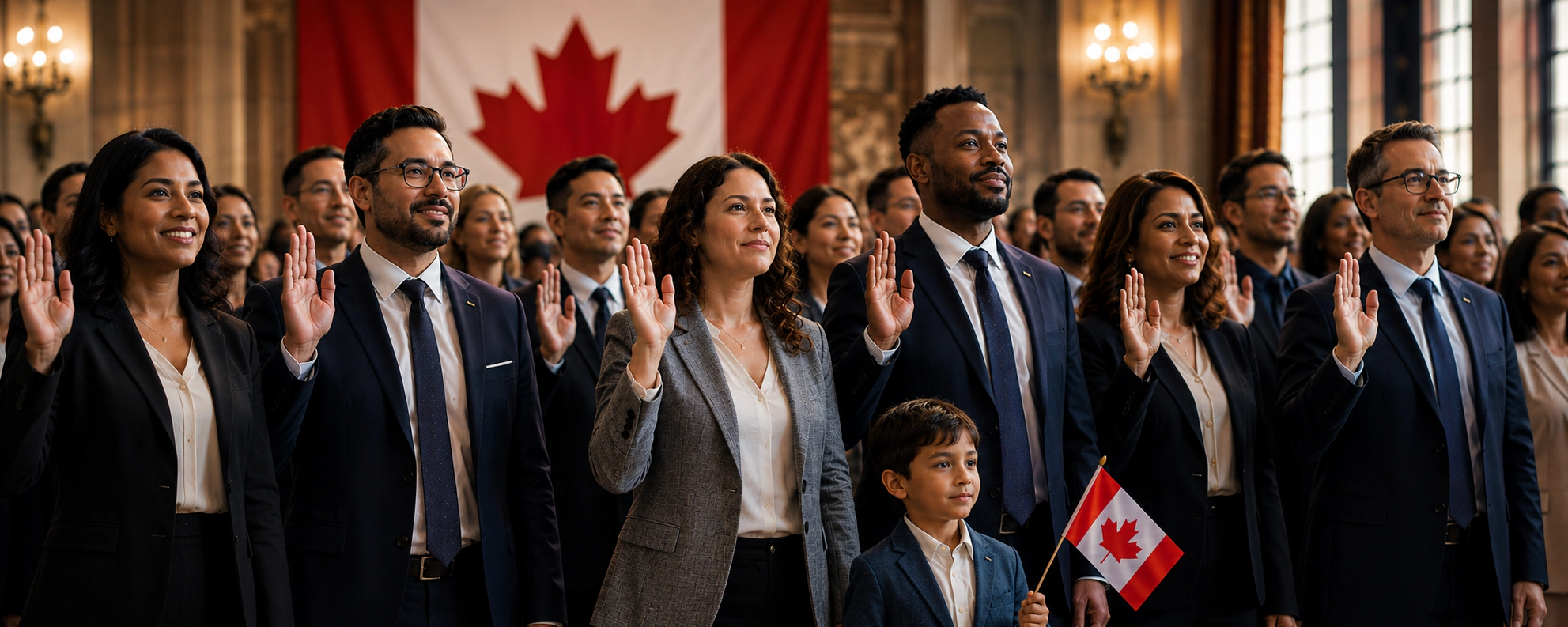
New Canadians take the oath of citizenship at a naturalization ceremony.
Slide 1 of 9
Canada is known around the world as a strong and free country.
Canadians are proud of their unique identity, rooted in ordered liberty, enterprise, hard work, and fair play.
We are the only constitutional monarchy in North America, with the oldest continuous constitutional tradition in the world.
Our institutions uphold Peace, Order, and Good Government—an ideal from the British North America Act of 1867.
Poets and songwriters have hailed Canada as the 'Great Dominion.'
To understand what it means to be Canadian, it is important to know about our three founding peoples: Aboriginal, French, and British.
Aboriginal peoples are believed to have migrated from Asia many thousands of years ago.
They were well established long before European explorers arrived, with vibrant cultures rooted in spiritual beliefs and relationships with nature and each other.
Aboriginal and treaty rights are enshrined in the Canadian Constitution.
The Royal Proclamation of 1763 laid the foundation for treaty negotiations with newcomers.
From the 1800s to the 1980s, many Aboriginal children were placed in residential schools to assimilate into mainstream culture.
In 2008, Canada formally apologized to former students of these schools.
Today, Aboriginal peoples have renewed pride and achievements in agriculture, the environment, business, and the arts.
Distinct Groups
First Nations: The term began to be used in the 1970s. About half live on reserve land in 600 communities; others live in urban centers.
Inuit: Means 'the people' in Inuktitut; they live in small Arctic communities and have deep knowledge of land, sea, and wildlife.
Métis: A distinct group of mixed Aboriginal and European ancestry, mainly in the Prairie provinces, speaking a dialect called Michif.
Demographics: About 65% of Aboriginal peoples are First Nations, 30% Métis, and 4% Inuit.
John Buchan, Canada’s Governor General (1935–40), believed immigrant groups should retain their individuality while contributing to the national character.
He encouraged each group to cherish their own traditions and embrace new ones through unity.
Canadian society stems largely from the English- and French-speaking Christian civilizations brought by European settlers.
English and French are Canada’s official languages, and the federal government must provide services in both.
Linguistic and Cultural Communities
Anglophones: 18 million people speak English as a first language.
Francophones: 7 million speak French. Most live in Quebec; one million live in Ontario, New Brunswick, and Manitoba.
New Brunswick: The only officially bilingual province.
Acadians: Descendants of French settlers from 1604, deported between 1755 and 1763 during British-French conflict. Acadian culture remains vibrant.
Quebecers: Mostly descendants of 8,500 French settlers from the 1600s–1700s, recognized as a nation within Canada in 2006.
Anglo-Quebecers: One million English speakers in Quebec with 250 years of heritage.
Some newcomers come from regions affected by war or conflict, but such experiences do not justify bringing hatred or violence to Canada.
New Canadians are expected to embrace democratic principles, such as the rule of law.
The majority of Canadians are Canadian-born, but Canada is called a land of immigrants due to over 200 years of immigration.
Many ethnic and religious groups live and work peacefully as proud Canadians.
Ethnic and Religious Diversity
Major groups: English, French, Scottish, Irish, German, Italian, Chinese, Aboriginal, Ukrainian, Dutch, South Asian, Scandinavian.
Since the 1970s, most immigrants have come from Asia.
Non-official languages like Chinese are widely spoken in cities like Vancouver and Toronto.
Religious makeup: Most Canadians are Christian (Catholic and Protestant), with growing numbers of Muslims, Jews, Hindus, Sikhs, and non-religious people.
Partnerships and Inclusion
Canada partners with faith communities to promote welfare, education, refugee resettlement, and religious freedom.
LGBTQ+ Canadians enjoy full protection and equal treatment under the law, including access to civil marriage.
Key points
Key Points to Remember
Canada’s identity is rooted in its founding peoples, constitutional monarchy, and commitment to peace and good governance.
Aboriginal rights are enshrined in the Constitution.
English and French are the official languages.
Canada is a multicultural, inclusive society where immigrants contribute to progress.
Religious freedom and LGBTQ+ rights are fully protected under Canadian law.
Gallery
FAQs
Understanding Canadian Identity
Aboriginal, French, and British.
Because its system of government includes a monarch as the head of state within a framework defined by a constitution.
It was the first formal recognition of Aboriginal rights and laid the foundation for treaty negotiations.
A distinct Aboriginal people of mixed First Nations and European ancestry, primarily in the Prairie provinces.
It means that Canadians embrace diverse cultural backgrounds and promote respect and harmony among them.
It is a founding principle of Canada emphasized in its constitutional tradition, promoting responsible governance.
Because of its vast and rugged environment, prosperity, and proud tradition of ordered liberty.
In 2008, the government formally apologized to former students for the harms caused.
Institutions that sought to assimilate Aboriginal children into mainstream Canadian culture, often through abusive and culturally repressive means.
They have made significant achievements in agriculture, the environment, business, and the arts.
Languages and Communities
Yes, both have equal status and the government provides services in both languages.
For maintaining their cultural identity despite being deported during the 1700s.
In Quebec, although significant populations live in Ontario, New Brunswick, and Manitoba.
English, French, Scottish, Irish, German, Italian, Chinese, Aboriginal, Ukrainian, Dutch, South Asian, and Scandinavian.
Yes, Canada partners with faith communities and upholds religious freedom and conscience.
It is the only officially bilingual province in Canada.
Chinese languages are the second most spoken at home after English.
Mostly descendants of 8,500 French settlers from the 1600s–1700s who maintain a unique identity and culture.
It means embracing democratic principles like the rule of law and contributing to Canadian society.
Yes, they enjoy full protection and equal treatment under Canadian law, including access to civil marriage.
Practice
Feel ready?
Try the full practice test or explore your next lesson to keep building your confidence.
Up next
Canada’s History
Major events and timelines that are frequently tested and easy to mix up.
🇨🇦 This lesson is inspired by official content from the Discover Canada guide by the Government of Canada.

