Explore the symbols that represent Canada's identity, values, and heritage—from the maple leaf and beaver to national honours and public holidays.
What's inside
Key points
Key Points to Remember
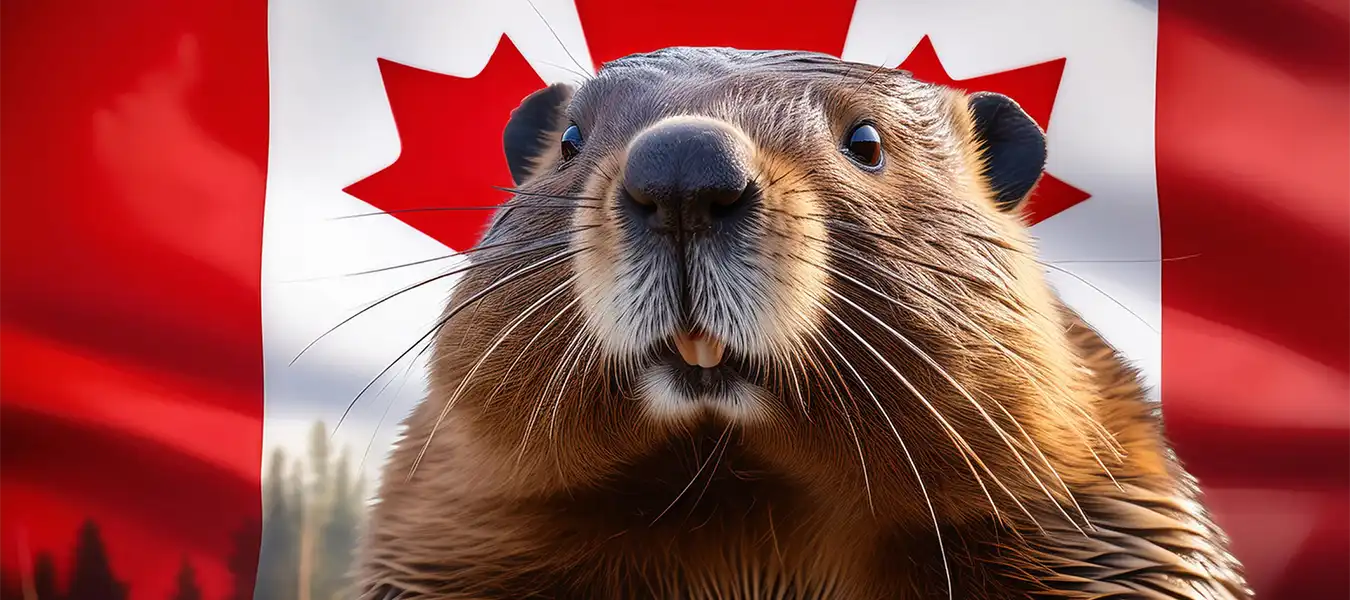
Canada's national flag features the red maple leaf and was adopted in 1965.
Other key symbols include the Crown, the beaver, and the Coat of Arms with the motto "A Mari Usque Ad Mare."
English and French are Canada's two official languages.
"O Canada" is the national anthem; "God Save the King" is the royal anthem.
Holidays such as Canada Day, Remembrance Day, and Victoria Day mark important moments in national life.
Slide-Based Overview
/ 13
keys
A journey through national pride and identity
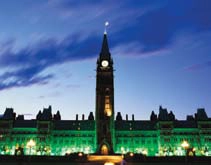
Parliament Buildings at dusk, Ottawa
What Are National Symbols?
Symbols express identity, culture, and values.
Canada’s symbols include flags, language, wildlife, and traditions.
Slide 1 of 13
Definition: Symbols are objects, people, or events that hold special meaning.
Purpose: They help express Canadian identity and values.
Examples of Symbols
Cultural Icons: Maple leaf, beaver, Crown, Parliament Buildings, and more.
Diverse Representation: National sports, official languages, and honours also reflect Canada's culture.
The Crown: Symbolizes the state, law, and governance.
Current Monarch: King Charles III has served since 2022.
The Mace and Parliament
Mace Symbolism: Represents royal authority in legislative proceedings.
Architectural Heritage: Parliament Buildings follow Gothic Revival style.
Reconstruction & Tribute: Centre Block rebuilt after 1916 fire; Peace Tower and Memorial Chamber honour Canada’s war dead.
Modern Flag: Current Canadian flag raised in 1965.
National Colours: Red and white designated in 1921.
Historical Flags
Royal Flag: Union Jack is the official Royal Flag of Canada.
Veterans’ Banner: The Canadian Red Ensign was used for 100 years and still carried by veterans.
Maple Leaf: Used by French Canadians since 1700s; appears on uniforms and memorial headstones.
Beaver: Adopted by Hudson’s Bay Company and societies; appears on 5-cent coin and coats of arms.
The Fleur-de-lys
Historical Roots: Symbol of French royalty and New France.
Modern Use: Appears on Quebec flag since 1948; represents French Canadian identity.
National Motto: 'A Mari Usque Ad Mare' means 'From sea to sea'.
Royal Arms: Includes UK nation symbols and red maple leaves.
O Canada and God Save the King
National Anthem: 'O Canada' proclaimed in 1980; first sung in 1880.
Lyrics Variation: French and English versions have distinct lyrics.
Royal Anthem: 'God Save the King' honours the Sovereign.
Bilingualism: English and French are official languages and identity markers.
Language Law: Official Languages Act (1969) promotes language equality and protects minority communities.
Order of Canada: Established in 1967 to honour outstanding citizens.
Canadian System: Replaced British honours with Canada’s own awards.
The Victoria Cross and Canadian Heroes
Award Description: Highest military honour for bravery in battle.
Recipient Count: 96 Canadians awarded since 1854.
Notable Recipients: Includes William Hall, Filip Konowal, Billy Bishop, Paul Triquet, Hampton Gray, and others.
Winter Sport: Hockey is the national winter sport and most popular spectator game.
Summer Sport: Lacrosse is Canada's official summer sport.
Other Sports: Canadian football, curling, and soccer are widely played.
New Year’s Day: January 1
Sir John A. Macdonald Day: January 11
Good Friday: Friday immediately preceding Easter Sunday
Easter Monday: Monday immediately following Easter Sunday
Vimy Day: April 9
Victoria Day: Monday preceding May 25 (Sovereign’s Birthday)
Fête Nationale (Quebec): June 24 (Feast of St. John the Baptist)
Canada Day: July 1
Labour Day: First Monday of September
Thanksgiving Day: Second Monday of October
Remembrance Day: November 11
Sir Wilfrid Laurier Day: November 20
Christmas Day: December 25
Boxing Day: December 26
Key points
Key Points to Remember
Canada's national flag features the red maple leaf and was adopted in 1965.
Other key symbols include the Crown, the beaver, and the Coat of Arms with the motto "A Mari Usque Ad Mare."
English and French are Canada's two official languages.
"O Canada" is the national anthem; "God Save the King" is the royal anthem.
Holidays such as Canada Day, Remembrance Day, and Victoria Day mark important moments in national life.
Gallery
FAQs
Symbols and Identity
They express Canada's national identity, history, and shared values.
It represents Canada and its people, historically used by French-Canadians and soldiers.
They are Canada's official colours since 1921, linked to France and England.
A symbol of state authority and government, rooted in Canada’s monarchy since 1867.
It includes symbols of England, France, Scotland, Ireland, and red maple leaves, reflecting national pride.
‘A Mari Usque Ad Mare’ – Latin for ‘From Sea to Sea.’
It symbolizes industriousness and was adopted by the Hudson’s Bay Company and later by patriotic groups.
A French royal symbol used in New France and Quebec's flag, representing French heritage.
The Union Jack, representing Canada’s ties to the monarchy.
It served as Canada's flag for nearly 100 years before the current flag was adopted.
Languages and Government
English and French.
A 1969 law that ensures French and English are equal in government and society.
Applicants aged 18–54 must demonstrate adequate knowledge of one official language.
It reflects Canada’s dual heritage and promotes equal opportunity and representation.
Canada’s democratic government and heritage, with architectural roots in English, French, and Indigenous traditions.
A tower in the Centre Block of Parliament dedicated to Canadian soldiers who died in war.
They record the names of Canadians who died in military service.
It was destroyed by fire in 1916 and rebuilt by 1922.
In the original Centre Block — it survived the 1916 fire.
French Second Empire, Baroque, Romanesque, and Neoclassical — reflecting Canada’s cultural diversity.
Honours and Anthem
An honour recognizing outstanding Canadians, created in 1967.
Canada’s highest military honour for bravery in the presence of the enemy.
96 Canadians since 1854.
Alexander Roberts Dunn, for bravery in the Crimean War.
William Hall, for his actions in the Indian Rebellion of 1857.
O Canada.
In 1980, though first sung in 1880.
God Save the King or Queen.
Yes, it may be sung on occasions honouring the Sovereign.
Orders, decorations, and medals recognizing exceptional service.
Culture, Sports, and Holidays
Ice hockey.
A championship trophy awarded in women’s hockey.
Lacrosse.
A trophy awarded to the NHL champion, donated by Lord Stanley in 1892.
A popular street version of ice hockey played by children.
Soccer.
Canada Day, Remembrance Day, Victoria Day, Thanksgiving, and Christmas.
On July 1st each year.
November 11th — honours Canadians who died in war.
April 9th — commemorates the Battle of Vimy Ridge in WWI.
Practice
Feel ready?
Try the full practice test or explore your next lesson to keep building your confidence.
🇨🇦 This lesson is inspired by official content from the Discover Canada guide by the Government of Canada.
