Learn why Canada is a trading nation, the main types of industries, and how trade with the United States supports jobs and living standards.
Key points
Key Points to Remember
Canada is a trading nation, and trade supports economic growth and living standards.
Canada is one of the ten largest economies in the world and a member of the G8.
More than 75% of working Canadians are employed in service industries.
Canada’s economy includes service industries, manufacturing industries, and natural resources industries.
Canada and the United States are each other’s largest trading partners.
Slide-Based Overview
/ 07
keys
Trade Powers Prosperity
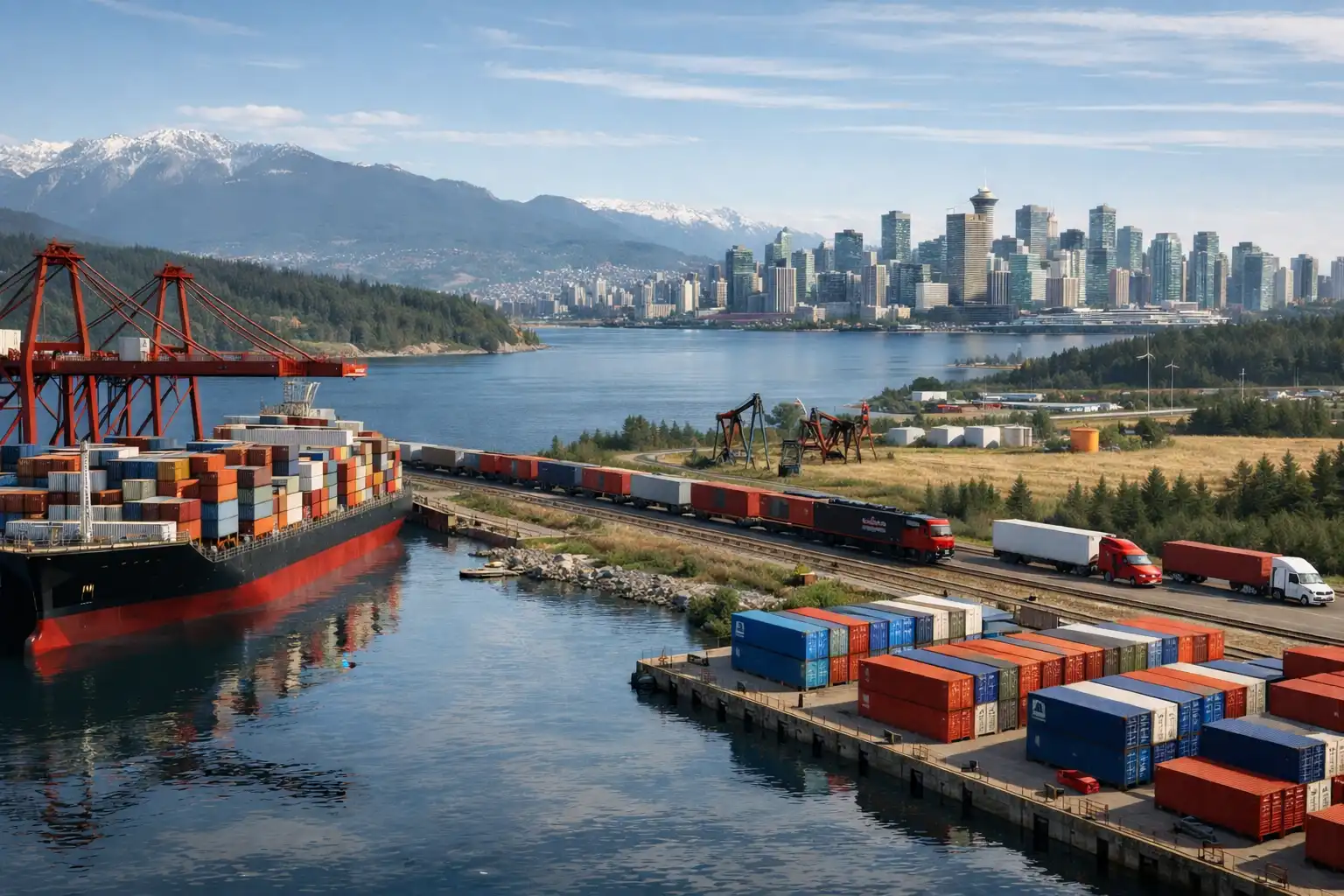
A wide-angle view of Canada’s interconnected economy, linking ports, transportation networks, natural resources, and a modern city skyline.
A Trading Nation
Canada has always been a trading nation, and commerce is the engine of economic growth.
Without trade, Canadians could not maintain their standard of living.
Connected Across Regions
Ports, transportation networks, industries, and cities work together to support Canada’s economy.
Trade connects Canada’s regions to each other and to the global economy.
Slide 1 of 7
Canada has always been a trading nation, and commerce is the engine of economic growth.
Canadians could not maintain their standard of living without trade with other nations.
Canada enacted free trade with the United States in 1988.
Mexico joined in 1994 through the North American Free Trade Agreement (NAFTA).
Canada is one of the ten largest economies in the world and is part of the G8 group of leading industrialized countries.
Canada’s economy is built on three main types of industries: service, manufacturing, and natural resources.
Service Industries
Service industries provide jobs in transportation, education, health care, construction, banking, communications, retail services, tourism, and government.
More than 75% of working Canadians now have jobs in service industries.
Manufacturing Industries
Manufacturing industries make products to sell in Canada and around the world.
Examples include paper, high technology equipment, aerospace technology, automobiles, machinery, food, and clothing.
Canada’s largest international trading partner is the United States.
Natural Resources Industries
Natural resources industries include forestry, fishing, agriculture, mining, and energy.
These industries played an important role in Canada’s history and development.
Many areas of Canada still depend on developing natural resources today.
A large percentage of Canada’s exports are natural resources commodities.
Canada enjoys close relations with the United States, and each is the other’s largest trading partner.
Over three-quarters of Canadian exports are destined for the U.S.A.
Canada and the United States have the biggest bilateral trading relationship in the world.
Integrated Canada–U.S.A. supply chains compete with the rest of the world.
Millions of Canadians and Americans cross each year at what is traditionally called the world’s longest undefended border.
The Peace Arch
The Peace Arch at Blaine, Washington symbolizes close Canada–U.S. ties and common interests.
It is inscribed with the words “children of a common mother” and “brethren dwelling together in unity.”
Key points
Key Points to Remember
Canada is a trading nation, and trade supports economic growth and living standards.
Canada is one of the ten largest economies in the world and a member of the G8.
More than 75% of working Canadians are employed in service industries.
Canada’s economy includes service industries, manufacturing industries, and natural resources industries.
Canada and the United States are each other’s largest trading partners.
Gallery
FAQs
A Trading Nation
Because commerce and trade with other nations are essential to Canada’s economic growth.
Because Canadians could not maintain their standard of living without trade with other nations.
In 1988.
In 1994.
Yes. Canada has one of the ten largest economies in the world.
Canada is a member of the G8 group of leading industrialized countries.
Service Industries
They provide jobs in areas such as transportation, education, health care, construction, banking, communications, retail services, tourism, and government.
Yes. More than 75% of working Canadians now have jobs in service industries.
They provide a wide range of jobs that support daily life, businesses, and public services.
Yes. Government is included among the service industries in Canada.
Yes. Tourism and retail services are examples of service industries.
Manufacturing and Natural Resources
They make products to sell in Canada and around the world.
Paper, high technology equipment, aerospace technology, automobiles, machinery, food, clothing, and other goods.
Industries such as forestry, fishing, agriculture, mining, and energy.
They played an important role in Canada’s history and development, and many regions still depend on them today.
A large percentage of Canada’s exports are natural resources commodities.
Canada–U.S. Trade and the Peace Arch
The United States.
Over three-quarters of Canadian exports are destined for the United States.
It is the biggest bilateral trading relationship in the world.
They are integrated and compete with supply chains from the rest of the world.
It refers to the peaceful border shared by Canada and the United States, crossed safely by millions of people each year.
It is a monument at Blaine, Washington that symbolizes close Canada–U.S. ties and common interests.
“children of a common mother” and “brethren dwelling together in unity.”
Practice
Feel ready?
Try the full practice test or explore your next lesson to keep building your confidence.
🇨🇦 This lesson is inspired by official content from the Discover Canada guide by the Government of Canada.
